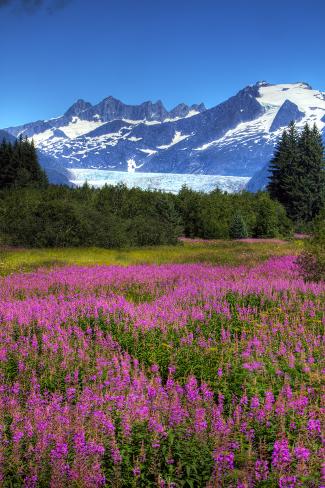
This vantage point for the Mendenhall Glacier in Juneau is one of the most photographed views in Alaska. This spot, which I could see from my office when I served in the Coast Guard, offered insight and reassurances as I watched my wife deal with metastatic cancer.
In the foreground is the muskeg meadow; wet, nutrient-rich, verdant, home to vast clumps of fireweed, Alaska’s state flower. In the background, framed by the glacier, are the Mendenhall Towers; mountain peaks rising 1.3 miles straight up from near sea level. These are young mountains, exposed as the vast icefield encasing them began to recede in the 1700’s. First scraped clean by the ice field and continuously swept clean by snow, ice and wind, these peaks have little of the life of the fireweed meadow they preside over.
So different – the fireweed meadow and the rock pinnacles – yet no one would argue successfully that the meadow is more beautiful than the peaks, or vice versa.
The meadow produces; the peaks stand in testimony. The fireweed meadow shows Alaska’s nurturing hand; the peaks show signs of Alaska’s harshest nature: hurricane force winds, snow and ice.
Like fireweed, many of us bloom because we happened to take root in the most accommodating and nurturing of soils. Like the Mendenhall Towers, some of us are scraped clean by the harshness of life, whether it be our environment, disease, or tragedy.
Turning the comparison of the meadow and the peaks slightly in another direction, I can write that nearly all of us start in the bloom of youth and over time evolve to a form more pronounced, bearing the marks of the ice and wind of this world, still beautiful as God’s image bearers, but deeper, more complex, weathered and polished.
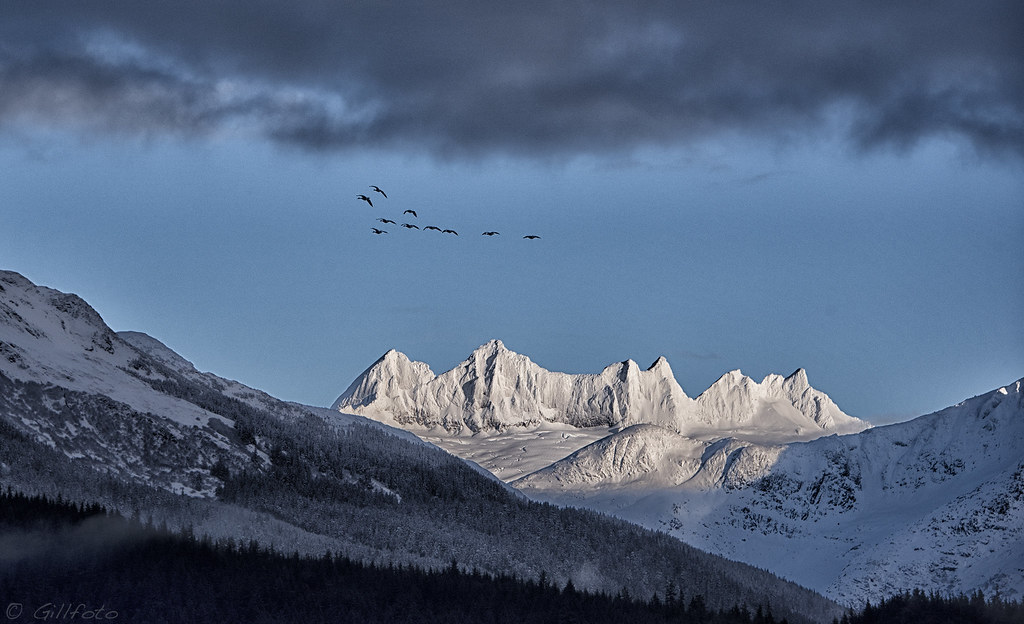
I watched Dona deal with a serious cancer since early 2014. Most cancer sufferers are described as ‘fighting cancer’ or ‘enduring a long struggle with cancer.’ I appreciate the spirit and determination those descriptions signal. But Dona did not fight her cancer, she let her oncologist do that. Dona seemed to maneuver her cancer, somehow positioning the disease at a place where she could learn, grow, even flourish. With each setback – a disappointing scan or lab report, a quality-of-life diminishing side-effect – I saw Dona maneuvering, adjusting, and finding a way to grow a little higher, like the Mendenhall Towers of Juneau; perhaps scraped and scoured a bit, but nonetheless ultimately towering over her disease.
Where does this come from?
As much as I would like to give her full credit I cannot. I was with Dona for 43 years. This is a new spirit. She has always had many attractive traits: thoughtful, kind, empathic but, also, a relentless planner, troubleshooter; dedicated to seeing peril around the corner and making big plans to counter the threat. Once she stored $2000 in a box after reading a report that cyber-terrorists could easily shutdown the electric power grid, making banks and ATM’s inoperable. But once she faced her worst and most real crisis, she became less anxious, more relaxed, less out to prove something to herself. When scan reports were not good, Dona took the news with courage, dignity, grace, humility; always encouraging and thanking her health care providers.
And she liked her ‘new metastatic self’. She wrote about it on more than one occasion.
I would not call this new outlook serenity. A more serene person would have done less on-line shopping. It was not stoicism either. We were still quite anxious during each visit to the hospital. As we waited for our oncologist to enter the treatment room, I would read her dumb jokes from the internet as a disruption.
I am still struggling to define and understand the change.
Recently, I have described this change as Dona’s confidence in God’s big plans for her future. Fear revolves around our thoughts about the unknown future and our imagining the worst of that which is unknown. But she was convinced that she had a future, and it was a good one. We prayed for a miracle of healing, for longevity. That is not granted, but no matter, we still have a future, and it is glorious.
Tim Keller writes, “We are future-oriented beings, and so we must understand ourselves as being in a story that leads somewhere. We cannot live without at least an implicit set of beliefs that our lives are building toward some end, some hope, to which our actions are contributing. We must imagine some end to life that transcends.”[1]
But that is not the whole story. Hope and faith are essential, but we need some external help. If it depends only on our personal resolve or insight we are back where we started – some of us succeed through a gift of temperament or fortitude, some not.
And we boast in the hope of the glory of God. Not only so, but we also glory in our sufferings, because we know that suffering produces perseverance; perseverance, character; and character, hope. And hope does not put us to shame, because God’s love has been poured out into our hearts through the Holy Spirit, who has been given to us. Who shall separate us from the love of Christ? Shall trouble or hardship or persecution or famine or nakedness or danger or sword? No, in all these things we are more than conquerors through him who loved us. For I am convinced that neither death nor life, neither angels nor demons, neither the present nor the future, nor any powers, neither height nor depth, nor anything else in all creation, will be able to separate us from the love of God that is in Christ Jesus our Lord.
Romans 5:2b-5; 8:35, 37-39
It can only be the Spirit of God that vitalizes life, communicates God’s truth, and reassures of his eternal plan for us through the grace of Christ.
What was great about this external strength was that when hardship came, I did not worry that Dona would not be able to endure it because it did not depend solely on her. I trust I will be able to draw on that same strength.
I so deeply miss her.
Dave Eley
[1] “Making Sense of God: An Invitation to the Skeptical” by Timothy Keller.

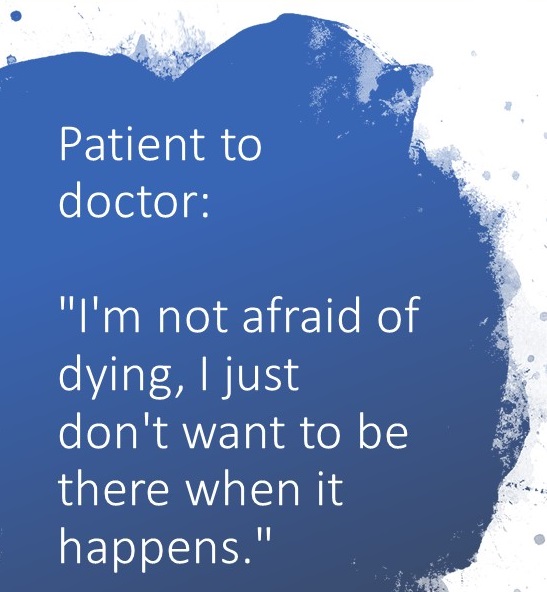
 “I want to die peacefully in my sleep, like my grandma.
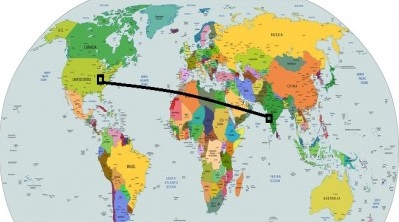 Audra and Jeremy are adopting a Down syndrome 19-month-old – nicknamed Hank – who is in an orphanage in India. They have never adopted or fostered. Audra has never been in a foreign country other than Canada (that doesn’t count), but she could not be more fearless, committed and excited. Passionate love has taken hold of her. Before she was dissuaded by the adoption agency Audra was determined to foster Hank in India for 3 to 4 months until the last court hearing and all documents were in place for her to bring him home. Audra and Jeremy were undaunted by obstacles; even the challenges of leaving her other three children in the care of Jeremy, the Dad. This couple was propelled by extraordinary and extravagant love. They only knew love’s longing to take Hank out of the orphanage, care for him, and ultimately bring him home to be part of his new family and church community; each which await his arrival with joy and anticipation.
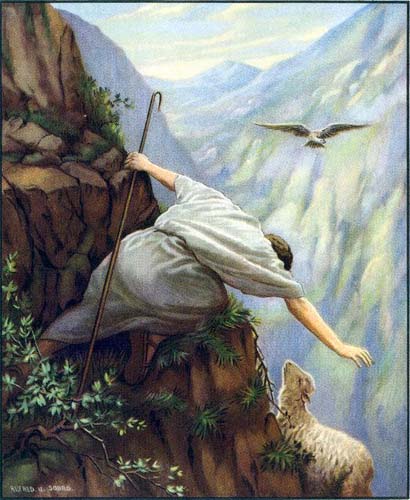 wanders away, will he not leave the ninety-nine on the hills and go to look for the one that wandered off? And if he finds it, truly I tell you, he is happier about that one sheep than about the ninety-nine that did not wander off. In the same way your Father in heaven is not willing that any of these little ones should perish.
 and finding meaning in names fosters connection and intimacy to each other, our environment, and, apparently, our diseases. The importance of naming is found in both Testaments. Being named, having a name carries spiritual significance. God revealed his name to Moses. Jesus was named Immanuel, ‘God with us.” Both Peter and Paul were renamed by Jesus.
 would sit with me and go over the results. We might pray together, then we would go the clinic room together to have the results further explained by the team and have our questions answered.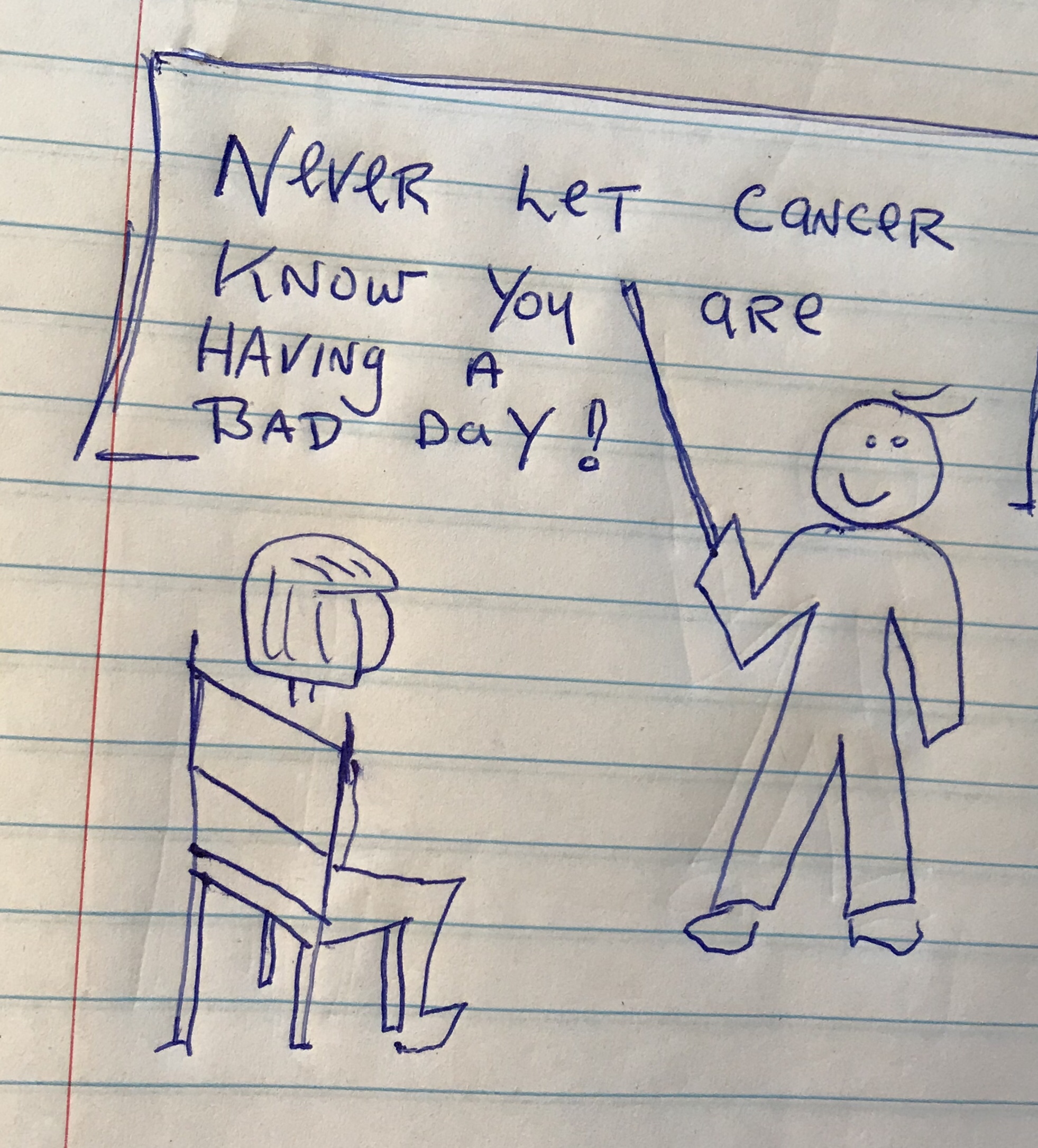
 Dona's Blog