 Today like every day except weekends I had radiation treatment at Buffalo’s Roswell Park Cancer Institute (RPCI). Desmond, our 15-month old grandson, came along for the ride. David watched him in the lobby of this huge sensory-filled place while I got my 20 minute treatment from my new best friends, my radiation therapists. After the 20-minute treatment David, Desi and I just hung out for an hour. I know it sounds weird to be hanging out in a cancer hospital with a child. What is wrong with a playground? But this bright expansive atrium with its Dunkin Donuts café, live music, gift shop, therapy dogs (one says hello in Spanish) and most importantly, a squadron of volunteers made Desi’s time special. Special for him and special for me since the end of February when I was diagnosed. I have yet to come back home immediately after a radiation treatment. I like visiting, snacking and socializing at RPIC. Those of you who know me are going to chalk this up to my sociability. Fair enough, I am social with or without steroids but that is not the whole story. There is an upbeat spirit about this place that goes way beyond my personality. And it is not just me who feels this way. Just ask anyone who has ever received treatment here. The army of volunteers and caring staff make the difference.
 I have been conducting my own informal poll; asking volunteers how long they have been volunteers, what they get out of it, and what motivates them to volunteer. As you might expect many are cancer survivors that have received treatment at Roswell and found the experience tolerable because of the way they were lovingly treated. Some have been caretakers of loved ones who received good care and warm receptions. And amazingly some are still currently in treatment for cancer. Their motivation is not too surprising, “I simply want to give back in some tangible way.” Other responses include enjoying the volunteers (lots of laughing among these folks) and the caring professional staff that appreciate them. Ryan, a paragon of upbeat-ness and coordinator of volunteers, describes going to a conference about volunteerism in the Western New York health care system. He learned that the average retention period for volunteers at health care institutions was less than a year; for RPCI it was 4.8 years. Hands down they outscored the others.
Shirley, a volunteer of 8 years coming from Canada, (no small sacrifice…Canada is just across the river but still a ½ hour to one hour border crossing each way) told a story of being part of a team that gave tours to CEOs from cancer hospitals all over the world. At the end of the Roswell tour, the CEO’s agreed, according to Shirley, that to two things that distinguished RPCI from other top cancer hospitals was the art work displayed and the Roswell volunteers.
But why is that? I am sure other hospitals have volunteers that are wanting to give back for the care they received. So, I went to another source to discover what the reason might be for the warm aura in this place and the long retention of its volunteers – over 500 strong, age range 14 to 98. Again, it feels a little weird to be talking about a cancer hospital like it is some kind of spa. But then again maybe it’s the element of unlikely expectations that provokes such appreciation. If I went to a spa I would expect to be pampered and warmly received. I don’t think I would ever have expected that going to a cancer institute would be anything but tedious and terrifying.
 I asked the director of volunteer services, “Why do you think this place attracts happy volunteers?” I explained that I was a patient and was numbered with many who felt cared for. I told her my story. “I could not face leaving the hospital after hearing the news of the pathology report after my surgery. I had to stay, sit, pray and walk around as I soaked in the ambiance – a nurturing kind of ambiance that I had no words for but knew I needed for a while before I was ready to leave and face life “on the outside”.
But my story doesn’t even come close to the heart rendering story I heard from the director’s assistant. A 20-year old boy was diagnosed with cancer and in 6 weeks he died. The family of the young man was so grateful for the care and attention that everyone showed (staff and volunteers) that over a hundred flower bouquets were bought and hand delivered to each person who interacted with their son and family in that short period of time. Their son liked flowers and the family could think of no better way to show their appreciation. There were other touching stories but the director also wanted to sing the praises of the administration who was consistently supportive of volunteers, making them feel needed and welcomed. “I feel a need to thank them (admin) almost every day.”
So here is what I have learned about volunteer competency, happiness and retention through personal experience and internet research. And by the way I have seen this happen at the Palestinian Bible Society with their volunteers and with Love INC – a charitable service for people in need in Juneau, Alaska.
- Volunteers have a need to feel like they are part of a mission bigger than themselves.
- Volunteers have a need to feel like they are giving back blessings because they know they have been recipients of blessing.
- Volunteers need to get along with each other and enjoy each other.
- Volunteers need to feel appreciated and needed by those in authority.
- Volunteers need to be part of a well-organized system that knows what to do with them.
But there is something else going on amongst these volunteers that is special but intangible. It cannot be reduced to bullet points. Throughout this “Dona study” of RPCI staff and volunteers, I have repeatedly sounded like a three year old who wants to understand something that is eludes my ability. “But why do you think this is so,” has been a common refrain as my therapist-mind wants to reduce ‘whys’ to their most indivisible core. I have concluded that I am not going to get my ultimate answer. Once again I must go to my default since this entire cancer treatment journey began: what is clear in the mind of God is a mystery to me. And not having my answer will not stop me from enjoying His benefits.
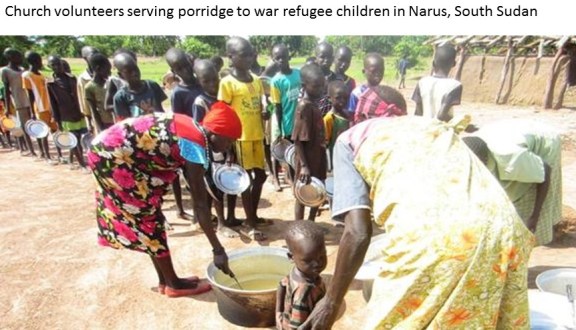 I spent time thinking something else happened. I would read or hear stories about people who were doing extraordinary acts of service because of their compulsion to serve Christ. Some of these people I knew through my Juneau church’s partnership with ministries abroad. Pastor Saphano, the Sudanese pastor of a poor struggling church in southern Sudan, who manages to house and feed over 250 orphans and refugee children from the civil war. Hannah who currently pastors a church in Amman, Jordan for Syrian and Iraqi refugees but once was the pastor of the Baptist church in Gaza. He continues his ministry in Gaza (see an interview with Hanna
  ive but for some it hit a raw nerve with angry criticism towards the author and the church. The following thoughts expressed in this blog and the ones in the article tend to be slanted towards the younger generation. But there is something for us oldsters to take home as well. After all, aging creates its own image issues. We are certainly not helped by the recent People magazine cover photo of Christie Brinkley at 60 years old.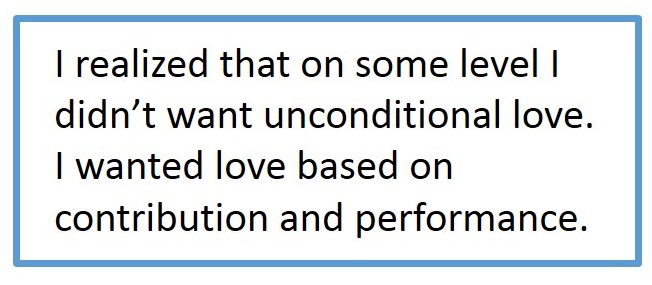
 Dona's Blog