Six months after Dona died, I got a new primary care doctor. During the initial intake exam and interview – that time when the doc gathers your medical history with head down keying in info – I told him, when prompted about ‘relational status’, that my wife had died. He stopped typing and looked at me for a full 10 seconds, saying nothing but with a face that showed such compassion and empathy that even now I have a lump in my throat just remembering that ‘connection’.
Two
“You are right, you have told that before, but that is such a sweet story about Dona that I was quite happy to hear it again.”
– Greg McClain
We, the bereaved, want to talk about our spouse. But we worry that we are repeating ourselves and boring our listeners. After talking about Dona, I asked Greg whether he had heard that story before. What a sensitive, affirming response from my daughter’s father-in-law.
Three
“When two people fall in love at least one will have their heart broken. It may be from separation or death, but it is what we sign up for. Love is life.”
– David Eley
Pardon the self-promotion. I said this to Dona when she knew death was near and worried about me. It both saddened and comforted her. She often repeated this right up to the end.
Four
“You were robbed.”
– Gail Schlosser
It was helpful for this pastor and close friend of Dona’s to tell me, “Although I appreciate that you can believe that other people have lost more, and that you are grateful for the life you had with Dona, you were still robbed. Robbed of many more years together, serving together, and experiencing life together.”
Am I grateful for the life I had with Dona? Of course. Gail helped me see that I was over-emphasizing gratitude at the cost of not fully facing my pain. It was time to scale back the “stiff upper lip” and perhaps even complain to God. (For helpful advice on lament, see Carolyn Madanat’s reflections in a previous post.)
Five
Making offers that require a ‘yes’ or a ‘no’.
In the days before and after Dona’s death, friends would tell me, “Let me know if you need anything.” These were sincere offers. They would have given me the shirt off their back if I asked. I appreciated their concern. However, like most guys, maybe even gals, I didn’t know what I needed and likely would not ask if I knew. What I needed was yes or no offers:
“I am bringing chicken parm over at 4 pm. Yes, or no?”
“We have dinner reservations for Tuesday at 6 pm. Please join us. Yes, or no?”
The week after Dona passed my brother-in-law told me he had booked an October hiking trip for us in the canyons of Utah.
At the reception after Dona’s memorial service a friend approached me and said,
“David, I’m so sorry……..now, would you be able to be my partner in the Thursday men’s golf league?”
Too fast? Not for me. Suddenly I had a vision of my future. Well, at least what my Thursdays and the upcoming October would look like.
When my wife learned that her cancer had metastasized, she picked up the pen again. Realizing the difficulties ahead she wrote:
Talking is necessary as the means of vital human connection but talking is not a discipline; not for me anyway. Writing is the spiritual discipline that keeps me grounded. And it has good science to back its claims to stress reduction and trauma healing. Writing forcibly imposes boundaries on thinking. It reins in anxious thoughts that would run off down numberless rabbit trails; causing untold feelings of misery, fear and confusion.
Three days after Dona’s funeral, an empty journal was left on my doorstep with following note:
Dear Dave,
Your text the other day has stuck with me – that you wished you could call Dona or write her a letter to tell her about Saturday….. It got me thinking: what if you did just that? What if you wrote to Dona and told her about all the things that were happening around you and inside you? Mundane events. Profound thoughts. Intense emotions.
Who knows, it might be a good way to process. And will provide a record for you of this hard road you’re on now…
This journal is for you in case you want to write to Dona. And if you think this is a completely daft idea; well, you got yourself a new journal! Or you can set it aside and regift it when you need a present in an emergency.
Peace I leave with you; my peace I give you. I do not give to you as the world gives. Do not let your hearts be troubled and do not be afraid.
– John 14:27
And so, I started writing. I filled that journal, then my son-in-law gave me another, and a friend gave me another. Sometimes I write to Dona, sometimes to God, sometimes using journal prompts suggested in my bereavement group’s workbook, sometimes I just write. Nearly all of what I write would not be useful to anyone else. But I read and re-read them. In a house fire, I would grab my journals before I fled….along with my golf clubs.
Three
Writing is like driving at night in the fog. You can only see as far as your headlights, but you can make the whole trip that way. – E.L. Doctorow
Four
The act of writing is drawing a fence around something wild and untamable, and suddenly it is linear and coherent. The people that write their stories are some of the calmest people that you will ever meet. It might be chaos in your mind, but it will be orderly on the page. Suddenly, all those things banging around in your skull will be put in order as you tell your story. It is going to have a beginning, middle, and end. It will be right. And that creates a sense of calm. I have tamed the chaos, and now I can do whatever it is next.
– Dave Eggers interviewed on TED Radio Hour, May 11, 2023 TED.npr.org
Five
I can shake off everything as I write; my sorrows disappear, my courage is reborn. – Anne Frank
That short sentence, written by a teenage Jewish girl hiding from the Nazi’s, succinctly states the benefits of lament, a practice so often employed by her ancient ancestors in the Psalms of the Old Testament. More on that in another post.
It has been a long day. I just finished chemo. I am in the Roswell Cancer Institute imaging clinic, waiting to be called for a brain scan MRI. David left to get groceries and prepare a late supper. I am disappointed, discouraged, teary-eyed, and, to make matters worse, a bit embarrassed.
7:00 pm
As I wait, I take the advice I gave to clients for years and have blogged about more than once: start journaling about the angst.
Confession:
I have been complemented by family, friends, and medical team on how well I’ve handled an abundance of difficulties throughout this process. And yes, I have felt validated respected and brave for my “handling it all so well.”
And yes, I have attributed my persevering, positive attitude to my dependence on God’s faithfulness towards me no matter what happens.
But over the last two days something started to emotionally unravel. It started with overreacting to my husband’s innocuous comments yesterday but thankfully having it all resolved quickly, more thanks to him than me.
I want to blame this emotional roller coaster on the steroids I am taking to heal the liver from an unfortunate turn in the immunotherapy treatment.
But…. Something other than steroid-craziness is going on.
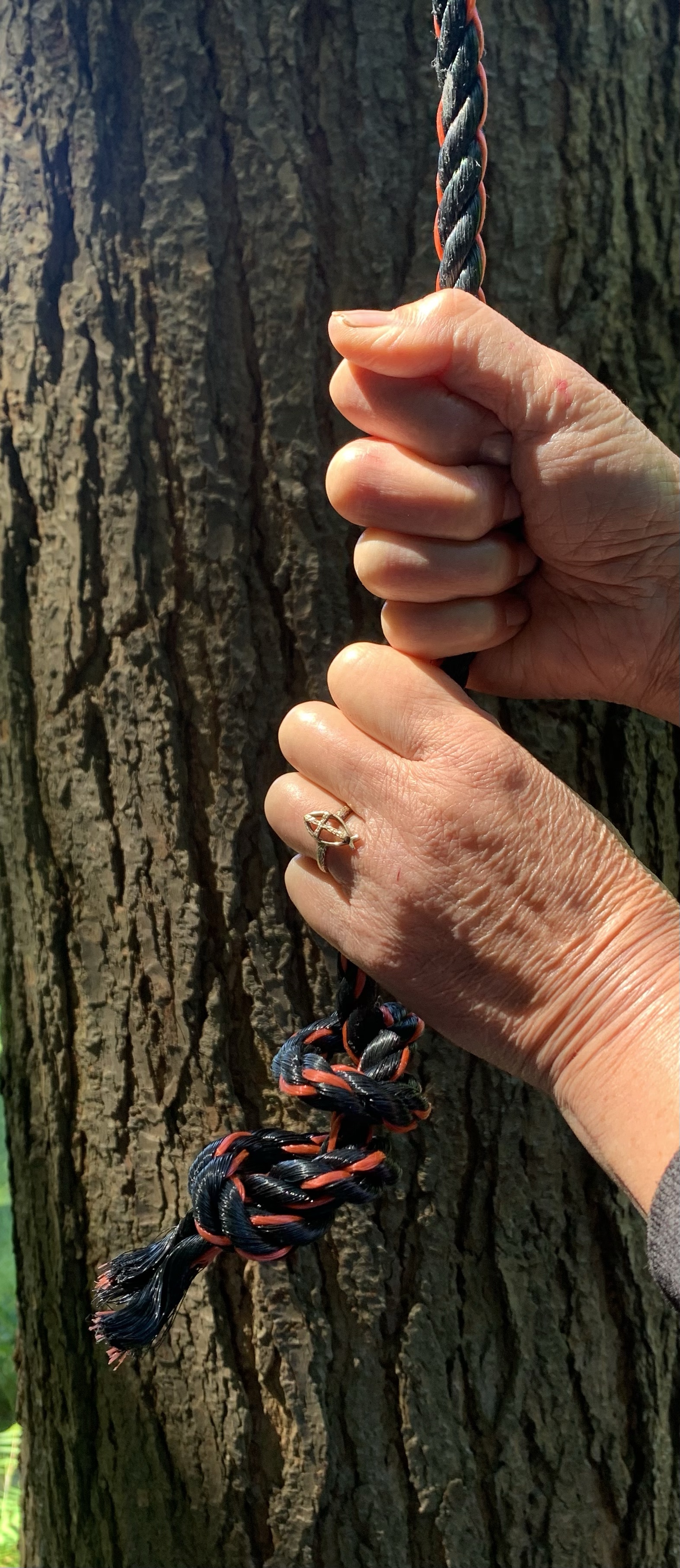
My ‘end-of-the-rope’ was bound to come but I thought it would come at the ‘end-of-the-road’ when all treatment options have been tried and failed, therefore reclassified as terminal. Another counselor told me once that when you reach the end-of-your-rope – the point where you cannot climb back up but cannot lower yourself further – it is time to let go and trust in God. I love that image. I have rehearsed that end-of-rope/end-of-the-road moment too many times to count. In that future scenario, when told there is nothing else that modern medicine can do for me, I picture myself demonstrating great faith and even love and gratitude for my wonderful medical team. I become some kind amazing hero of faith in my eyes and in others. Ah, the follies of ego!!!
But I am having an end-of-rope moment now. This morning, I had an unexpected call from my oncologist to come in for an unscheduled visit. I was hoping he wanted to discuss weaning me from steroids. The opposite happened as my liver enzymes had gone up. He has increased, slightly, my steroid dose; meaning less sleep and immunotherapy still off the table.
I had an unexpected reaction to the consultation. I got visibly frustrated and hurt. Tears!
The irony and hypocrisy of the reaction is that yesterday I had complained to friends of hearing of cancer patients reacting similarly, being unreasonable and unfair to their medical providers.
Not that I went ballistic. Hospital security was not called. But I had tears of frustration, and I over-questioned my healthcare providers. I argued about use of words. “You say ‘increase’ in liver enzymes but I say, ‘slight uptick’ when I look at the graphs.” After spending more time with me than I deserved I patted my oncologist on his hand as he was leaving, an apology, of sorts. But it did not end there: as I was led to the chemo chair, I was told that my oncologist had just ordered in addition to the chemo an hour of saline for low sodium before the infusion. Come on! My feet were already in a crazy swollen state of discomfort I questioned the purpose of this. I asked the infusion nurse several times to call the oncologist finally reconsidered and gave me what I wanted. (If the low sodium was acute, he would have won that skirmish for sure).
8:00 pm
Back in the imaging waiting room, the technician finally called my name for the MRI. As we are walking to the imaging room, he said the scan would not take an hour, as I assumed, but only 15 minutes. That simple correction somehow, in some way, flipped the mood switch. Delighted, I became my friendly chatty self as I sensed that joy was beginning to take hold again.
The Lord heard my lament and gave me hope. David is thankful to see the smile back on my face!
9:00 am, Tuesday, August 9
But I cannot leave it at that. It is tempting to think of God smiling at us with approval when we are behaving graciously and mercifully to those around us especially when we are suffering and amid disappointments. Conversely, we imagine him clucking his tongue when we are miserable, irritable, and faithless. The thing about that is that it does not typically lead to a heart change. Why? Shaming is not affirming or inspiring. It gets us stuck in a spiritual arrested development. Spiritual maturity on the other hand fills us with the knowledge of God’s love that surpasses our understanding (Ephesians 3:19).
He made us to trust in his unfailing and never changing love. It is who he is, and the operative word is grace (unmerited favor).
Neither you or I can make God love us more or less by what we do when we have already thrown our hat in the arena of God’s faithfulness. And in a mysterious, wonderful way we are changed and willingly motivated to continue the good fight of our faith. (1 Timothy 6:12) We can let go of the end of the rope.
And, as Paul writes, “No eye has seen, and no ear has heard, and no mind has imagined the things which God has prepared for those who love him.” 1 Corinthians 2:9
This is something to fight for, something to live for!
At 716 Ministries, we just finished an intense, 3-week training course designed to help 18 Afghan evacuees, recent arrivals in Buffalo, adapt and succeed within the American work culture. It was delivered in three languages – English, Dari, Pashto – to a diverse collection of farmers, soldiers, engineers, medics, professors, mechanics, government officials, taxi drivers. We heard their stories. Some came with their families; some, tragically, for their temporary safety, left wives and children behind. All left behind their material possessions, or at least what could not be carried in a small bag.
What is the one thing you’d take if you had to leave your home, your country immediately?
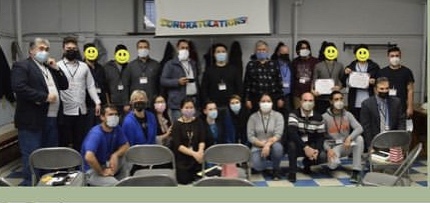
Afghan Work Readiness Class, December 2021
I asked several students what they brought with them; what they packed of their identity.
One woman, a professor, had 15 minutes to pack and flee to the Kabul airport. Other than essentials, she took her perfumes. She told me, “My fragrances are part of me, they are part of how I think of myself.” I get it. Her colognes reminded her of her essence.
One man – farmer, corporal, citizen-soldier – proudly showed me his laminated wallet-sized certificates of recognition from the US Army, attesting to his contributions to various military deployments. Operation Eagle, Operation Red Dagger, Operation Achilles. He played these cards out before me as if presenting a winning poker hand, a royal flush or inside straight.
I am grateful for smart phones. A person with a smart phone can flee a country with the family photo albums intact. Children, moms, wives, husbands, handshakes with US military special forces. One man, a mechanic, showed me a short video of his fancy footwork on the soccer field, dribbling around two opponents. For some reason, this made me sad. The bright red and yellow football ensembles, the shouting and clapping, the joy of a peaceful summer afternoon on the field with friends in Afghanistan.
On the last day of class, we conducted mock job interviews. We brought in eight potential employers and let the students rotate amongst them, practicing and refining their pitch. This is the highlight of all our courses, where students grow in confidence with each successive interview. One student, an engineer, forced to leave his family behind and currently disabled with a distressing and, as yet, undiagnosed nerve injury, told an interviewer, “I left much behind, but one thing I brought with me was a positive attitude, a strong work ethic, and a hope for a better tomorrow.”
There is a common thread amongst the things these Afghan evacuees brought with them from the Kabul airport to a US military processing facility in Virginia, and ultimately to Buffalo: a reminder of their personal dignity.
Creek Rock Art: Flight to Egypt (Dona Eley)
Did Mary take the perfumes (frankincense and myrrh) with her when she and Joseph fled with the baby Jesus to escape the wrath of Herod? (Thank you, Egypt, for your hospitality.) During his family’s exile, what did Joseph look to for dignity and hope to deal with the fear, anguish, sense of powerlessness, boredom, lack of community and meaningful work, heavy responsibility?
Pastor Acher Niyonizigiye, a former refugee from the Burundi civil war of the 1990’s, wrote, “We often see the Nativity (Advent) as a celebration of comfort and innocence. In Europe and North America, Christmas is often a time to think of coziness. Could Joseph or Mary ever fit in with these modern Christmases?”
Could Joseph or Mary ever fit in with these modern Christmases?”
– Acher Niyonizigiye
Dona and I are big fans of coziness and comfort. But during this Advent season we are grateful that in our cozy little corner of western New York, we could be a part of one of the organizations providing some measure of comfort and safety for our new neighbors. I do not want to over-compare myself to Joseph and Mary, or even the strength and resilience of the Afghans I met, but I do pray that at life’s inflection points along the journey through this fallen world I will, like Joseph, ‘get up’ and do what the Lord commands (Matthew 1:24 & 2:13), or, like Mary, be the Lord’s servant and embrace the small role I am given in the Kingdom (Luke 1:38).
I read the paragraphs above to Dona. After appropriate encouragement she said, with the insight and clarity I depend on, “You are missing the most important part.”
Advent (arrival or ‘the coming’) is a season of expectation. There are some parallels between the Christian season of Advent and the arrival of the Afghan evacuees and their attendant expectations for a better life. But for Christian believers there is so much more. At Advent we look back at the birth of Christ and ahead to the return of Christ. Faith in the reality of the past and hope in the reality of the future combined. The Nativity is a big deal. But we, who embrace the Jesus story, see the return of Christ and our resurrection as the ultimate deal. With the Second Advent, poverty, missed employment opportunities, anguish, powerlessness, family separation, disease, terror, war, even death will be no more. We will be done with this fallen world.
As I reread the last paragraph I thought of our own uncertain future, Dona and I. This month, my brave and lovely wife entered her 4th year of struggle against metastatic cancer. Six different therapies to date, this last one the most draconian: chemical infusion each week, hair loss, nausea, fatigue. There are lots of tears shed by us both, but yet, and yet, we experience the joy of the reward of the ultimate deal. I can say confidently and without false bravado that Dona has a ‘peace from God that surpasses all my understanding.’ And I feel it, too. (Philippians 4:7)
Now, how to proclaim this good news, the Gospel, winsomely, humbly, and authentically to our Afghan neighbors, indeed to all our neighbors?
Four Reasons We Don’t Feel Comfort from God, published in July 2015, remains my most popular post. Nearly every day that post will get several visits. I’m not sure why. I am an obscure blogger buried in the internet. Perhaps the title bubbles up near the top when someone Googles ‘comfort from God.’ I wish I could generate this popularity for my other posts so advertisers for cancer yoga pants and pink ribbon nightshirts would flock to me. But seriously, I suspect tens of thousands of people trawl (not troll) through the web every day, desperately looking for some comfort, some solace from God. I have a heart for these people. On occasion, I am one of them.
As I lurch from one cancer therapy to the next, struggle against one quality-of-life-diminishing side-effect after another, and, consequently, am painfully reminded of my mortality daily…….I MARVEL at the ways God gives me comfort. I keep a running list in my head of how he meets me more than halfway. In thinking about these comforts, which are often subtle, I can see why if I am not alert, I may miss them.
I miss the comfort because it does not come according to my timetable.
I miss the comfort from God because it comes through means I take for granted.
I miss the comfort because I do not realize my suffering is an opportunity to serve others. (The service is the comfort.)
I miss the comfort because I am just too fatigued or lazy to draw on the resources of the church family.
God’s comfort is not according to my timetable
Diagnosed with metastatic breast cancer since 2018, there is not a visit to my oncologist since then that I don’t feel like the sword of Damocles hangs over me, ready to drop. In the run up to the appointment, I am always praying for encouraging news about the level of tumor markers or the results of scans. And then I pray that I would feel God’s presence and that I would have courage to face what is in store as I wait for news. I am follower of Christ, so I know that my relationship with him comes alongside suffering and comfort. None of us are exempt from this reality but when I suffer, I want that comfort on my timetable, not God’s, for that usually requires waiting. I’m tempted to question God’s love because the waiting feels like an answer: “no comfort for you today and maybe never.”
Antidote: In such times I resort to writing. It is therapeutic to get my complaints and worries down on paper. This is a practice that I encouraged my clients to do with excellent results. The benefits of writing down thoughts, feelings, experiences, grievances have been researched and validated repeatedly. There are biblical precedents for this as well. The authors of Psalms, Ecclesiastes and Lamentations aired their complaints to God. Read Psalms 42 and 43 for a blueprint on how to record our grievances. And note the end of these Psalms. End our complaints in remembrance of God’s faithfulness in the past and therefore a hope for the future. I often do this as an act of faith, even though I don’t always “feel” it.
God’s comfort comes through means I take for granted so it is not recognized as his comfort.
Many times, I ignore the steady stream of God’s comfort coming my way. I’m looking instead for a spectacular deliverance that takes away all the disappointments, dread, and angst that cancer brings.
“God! Where is your comfort?”, I ask as tears well up upon hearing not so encouraging medical news. Then, upon later reflection, I realize that God’s comfort is always present. David, my husband is always with me, bearing with me the emotional toll of this cancer – a comfort that I assumed as insignificant compared to some dramatic show of comfort from God that would prove he cared about me. I am the recipient of comfort that comes by way of family, friends, church community, and good medical care. It is not good to ignore these obvious God-comfort sources just because they lack a spontaneous, spectacular, supernatural intervention.
Question: What brings you comfort? Who brings you comfort? Can you tie these comforts back to God? If so, then practice the habit of thanking God out loud, as well as thanking those who are God’s ambassadors of comfort to you. Do both often. It will become a habit which will prepare you emotionally and spiritually for when the really hard times come. You will be blessed and comforted in the process.
God’s comfort can come through my comfort of others
2 Corinthians 1:4
“He comforts us in all our affliction so that we will be able to comfort those who are in any affliction with the comfort with which we ourselves are comforted by God.”
Bible makes it clear that our suffering can act as a refining fire for developing character in us as well as producing benefits for others. Our suffering and subsequent comfort from God gives us street cred in helping those who are suffering likewise.
I am touched when people reach out to me for encouragement and comfort. Many times, these people have a less severe cancer diagnosis and prognosis than I have but cancer is cancer and scares the heck out of anyone regardless of the severity.
For nearly 15 years I spent most of every winter working in the Middle East; teaching and coaching women in the practice of good mental health. These Arab women had very hard lives; harder than I could imagine. However, the moment I disclosed my cancer diagnosis (stage 3 back then) I could sense that my audience was touched and had warmed up to me. It was as if this ‘weathy’ American woman was not so privileged after all. On some level I was included into the fellowship of suffering women. The playing field was leveled, and they expressed encouragement by what I taught. I was blessed by playing a part in their comfort.
Helping others releases God’s comfort not just for others but for us as well. Helping others triggers the release of “feel good” hormones like oxytocin, serotonin, and dopamine which gives a mood boost.
‘Dragging myself’ to church brings comfort
The kindness and love of the church family brings tremendous comfort. This comfort is ordained by God. If we are not a part of a church community we miss out. Being amongst the fellowship of believers in general, and being prayed for in particular, is one of this life’s spiritual, emotional, and physical means of receiving God’s comfort.
Metastatic cancer treatments offer no cure but rather cancer management with the latest targeted drugs and procedures to prolong life as long as possible. The disease as well as the side effects of treatments can feel endless. “Whack a mole” is what my husband has coined it. One rough symptom is dealt with and right behind it comes another. I’m tired, physically. More seriously, I feel like I am tiring out my church family with frequent prayer requests to address the latest physical trial. I am tempted to stifle the prayer requests, ignore my church community, and rely on ministrations of the medical community to see me through till the end.
This past Sunday and I considered not going to church sporting my newest symptom, Bell’s Palsy. My husband was delivering the sermon, so I ended up going to support him. By the end of the service, I was drawn compelled to ask for prayer by from a couple of people. Instead, eight or nine people gathered around me, laid hands on me, and prayed gently and compassionately. A flood gate of tears was opened but by the end I marched to my car with a lighter step than I had had for a while.
The elephant in this blog post
What happens when comfort gives way to death which we know happens a lot with cancer? Again, depending on your confidence in the reality of the risen Christ, there is yet an ultimate comfort. It’s a tough one to internalize but nonetheless it is expressed too many times in the New Testament to be ignored and its crucial to living faithfully in Christ during this life. This life is not all there is. We must think of and dwell on this. But be warned! if you think or talk too much of eternal life or heaven or resurrection you will be dismissed as a flake or someone who has their heads in the clouds. Don’t be dissuaded. Contemplating the reality of heaven is a wellspring of hope for a future where all things are made just, good, and beautiful. It is here that you will find the comfort you need to live courageously and generously. For relentless sufferers, death in Christ is the best comfort of all! God’s comfort never, never, never lets us down. It is only in forward thinking that I ultimately find comfort. There is sufficient comfort in this life to give us joy within sorrow and hope within disappointment. But eternal life is where “every tear will be wiped away”, not before. For now, we fight the good fight of faith.
What cancer has taught me about the joy of missing out (JOMO)
As it turns out an antidote for the subject of my most recent post, FOMO (fearing of missing out), is JOMO (joy of missing out). JOMO is basically saying “no” to the push to stay busy and connected with whatever presents itself in order to say more ‘yeses’ to activities that are more in-line with our values and interests. Many are jumping on the JOMO wagon. Productivity gurus are incorporating JOMO in their training. Stressed out working moms have self-help books to achieve JOMO. CEOs are trying to find balance and enjoyment within the pressures of fierce business competition. It’s all part of a new cultural phenomenon – searching for peace and joy within a world of relentless busy-ness, competition, and high expectations.
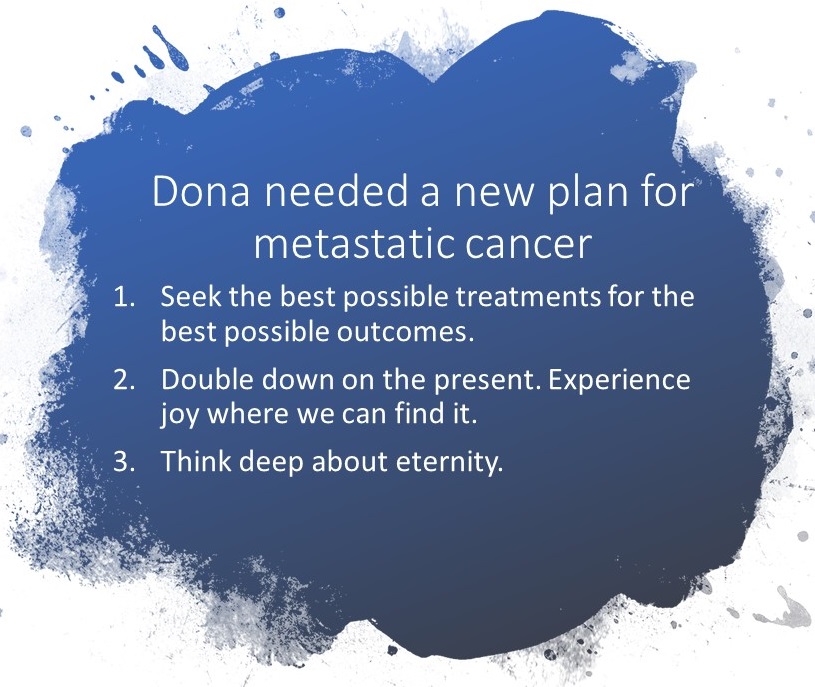
At first blush the acronym, JOMO, seemed forced and naive to me; but then I realized that it was exactly what David, my husband, and I were attempting to do since my diagnosis of stage-4 cancer. Doubling down on the present and embracing joy is integral to the 3-part strategy my husband and I developed to cope and grow.
1. Pursue the best possible treatments for the best possible outcomes.
2. Double down on the present. Experience joy where we can find it.
3. Think deeply about eternity.
And there is evidence that we are doing just that. Laughter has always been coveted in our relationship but there is now more of it as we appreciate grandson antics and their hilarious comments. There is more laughter as we look for the amusing in ourselves and others; reminding ourselves to not take ourselves too seriously. There is more laughter as we retell shared funny experiences. There is joy as we actively pursue our passion to see marginalized people treated with God-given dignity and value. There is joy as we worship in church. There is joy as we enjoy the natural beauty around our creek cabin. There is joy of family and friends. There is so much joy and delight in our lives that we’ve been blessed with. We are grateful. But ….
• This is easier to do if I’m not in pain
• This is easier to do when I have had some distance from a disappointing oncology appointment.
• This is easier to do because it is my story and not a loved one’s.
In other words, there is within the JOMO movement a limitation. There is an exclusion clause, unspoken but nonetheless imbedded in its good intentions. Stopping to smell the roses sometimes leads to being stung. Being stung too many times can lead to anaphylaxis. Smelling a rose must give way to getting help to breathe. There are life experiences that leave us limping along, breathless from the sheer pain and exhaustion of life’s journey. Sometimes I feel like that. JOMO becomes elusive at best and downright annoying at worst. And so I cry. (See: More on finding comfort from God.)
It’s here that the 3rd part of our strategy takes dominance over the “doubling down on the present.“ Thinking frequently and intentionally about eternal life with the God who loves me is fundamental to any nod of acceptance and significance that I give to JOMO.
“So Heavenly-minded that a person is no earthly good” is not born out in the course of my life nor for countless others. It’s quite the opposite: becoming more heavenly-minded has prompted the Jesus-committed to do what can be done to effect positive change in this world while at the same realizing that Christ will ultimately set all things right. And some have made great sacrifices to that end.
But what about the fear of missing out on all the beauty and companionship of this world?
Many years ago, my two young daughters and I were riding our bikes together in our neighborhood. The balmy gentle breeze of a Virginia springtime with its blooming azaleas and dogwoods, greening weeping willows, and scented pine and magnolia underscored the laughter of my girls. I was filled with an inexpressible Joy. I remember silently thanking God while at the same time bemoaning that it wasn’t going to be ours for long. A transfer to another location in the country was imminent.
I longed for permanence in beauty and perfection. It was then that I realized for the first time that the aroma of magnolias and the music of a child’s laughter were only clues and hints of glory – not yet fulfilled nor meant to be. He has placed “eternity in our hearts”. (Ecclesiastes 3:11) The permanent, perfect, and pure in love and beauty would my inheritance. I think I can wait. Lord, help me wait.
“Death Cafes” are springing up in cities throughout the world to address the subject of death and how-to live with death’s inevitably.
Apparently, the movement was started to give people a “safe place” to talk about death without being accused of morbidity. Billed as a philosophical inquiry on mortality, people looking for a grief support group will be disappointed. “Eat cake, drink tea and discuss death”, is the benign motto. The decor includes mugs, teacups and posters with creepy skulls, skeletons, and ravens painted on them. I admit that I’m put off by the skull mugs in the Death Cafes.
But these venues and discussion groups deserve more than half a point. The vast majority of Americans live in the mythical state of immortality. ‘Mythical immortality’ (my term) is the belief that other people die, I don’t. (See, ‘I Like the New Metastatic Me’) When we do think about death it is in the context of avoiding it. Anne Patchett writes:
“The fact is, staving off our own death is one of our favorite national pastimes. Whether it is exercise, checking our cholesterol or having a mammogram, we are always hedging against mortality……Despite our best intentions, it (death) is still, for the most part, random. And it is absolutely coming.” 1
Death cafes, though they deal with an inevitability ignored by most, do not capture rightly the travesty of death or the Christian hope of triumph over it.
The point of Death Cafes is to make death less fearful in an age of anxiety. I get it. But the death mug approach to the subject does not capture the travesty of death. I say travesty because the Bible makes it clear that death is an enemy that is finally destroyed with the coming of the new heavens and earth at the culmination of time. And that is where the Christian hope comes in. The story is not over with our deaths. There is the hope that Christ ushers us into his glorious presence where every tear is wiped away and grand reunions are still to come. So maybe what I could benefit from would be a café whose moniker is “death does not have the last word”. A safe place where my faith tradition is shared with others so that I hear stories about people who have died well within the confidence of being on the threshold of an eternal reality. Granted my death café sounds a bit exclusive as it would possibly not be very attractive to secularists or folks from other faith traditions; but at the end of the day, with facing my own mortality I want to hear a café filled with conversations about hope, faith, courage, love and forgiveness. I want to hear and talk about Jesus. I want to live life in the moment with increasing gratitude. Hearing stories about people who lived well up to the moment of their deaths is my cup of tea and I will happily eat some cake while doing so.
Ann Patchett, “Scared Senseless,” The New York Times Magazine, October 20, 2002.
I’ve always been interested in theological discussions and debates concerning the nature of hell among evangelical theologians. I have my “hard and fast” opinions about this serious matter but that won’t be the topic of this post. Sorry, for anyone out there who thought this was going to be a very provocative diatribe from an untrained non-seminarian theologian who admits to having strong opinions that she’s accustomed to changing. If you are interested, a report by the Evangelical Alliance Commission on Unity and Truth Among Evangelicals (ACUTE) called ‘The Nature of Hell’ outlines the differing opinions in clear and concise language.
Philosophical thoughts about cancer and mortality are frequent speculations. Recently, I looked for studies about what people with incurable cancer thought about hell. My cursory search didn’t turn up much, but I did come across a website for people voicing their thoughts about their diagnosis of terminal cancer. Hell was not a major topic, but one comment written over a year ago was difficult to read and generated a lot of responses from other sufferers. The commenter began with the following, “I have been told that I have 4 months to live and I am so afraid I am going to hell.” The responses were quick, empathic, and supportive. This woman’s heart-wrenching, brutally honest attempt to explain why she was in this frame of mind included her offenses to her family and specifically to her young daughter since her diagnosis. She felt conviction over the mess she had made of her life before diagnosis. But the real source of her anguish was the angry lashing out and jealousy towards healthy family members and friends.
I was moved by two observations. The first observation was the compassion extended by terminally ill responders who were compelled to try to make this woman feel better. Why were these fellow sufferers so compelled to help? Speaking from my own experience, there seems to be enough suffering to the illness as well as the grief of anticipated losses without added dread of future condemnation and alienation. That is unbearable. Like the others I was touched and wanted her to be at peace.
The second observation concerned the content of the responses. They ranged from:
1. On one end, “Forget about it, hell is a human construct that started in the middle ages by the church to secure their control and power over people,” to the other end,
2. A detailed lengthy comprehensive gospel presentation which was actually good if the sufferer could take it all in, to
3. The middle majority, which encouraged the writer to seek forgiveness from and reconciliation with those she admitted to hurting.
These posts were over a year ago. This woman may not still be alive, and the site did not show her response to the comments her original plea generated. Did she find peace? I hope so. If I had responded a year ago, I like to think I would have written:
“None of us are good enough to meet the holy standard of God. None of us. Thus, God himself in Jesus appeared 2000 years ago with a mission for securing our forgiveness. By simply trusting in his sacrifice by faith we are found perfect and acceptable before a perfect and holy God. Nothing is more liberating for the guilt-ridden. I know this. Then Christ fills our heart with gratitude and out of this grows the humility and courage to trust God to ask forgiveness from those we have offended.”
I hope she took the best of the advice and received the grace through Christ who forgives it all. I can’t imagine that if she sought her family’s forgiveness that she did not receive it from them. If she did not, well, peace with God trumps all to secure her peace for eternity.
A recently composed hymn, “His Mercy is More,” says it beautifully. It was inspired by a sermon by John Newton, the creator of “Amazing Grace”.
“Our sins are many, but His mercies are more: our sins are great, But His righteousness is greater: we are weak but He is power.”
Stage 4 cancer patients have another definition for victory
Preamble: I took note of Dona’s post, the Clarity of Ink where she contends that writing forcibly imposes boundaries on thinking and reins in anxious thoughts. So, I began to write about my worries and hopes for my wife who is living so valiantly with Stage 4 cancer. Dona suggested when I was ready I could guest-post on her blog. I’m a bit uncertain making this public. Writing is quite therapeutic, but it is likely only a help to me. Moreover, as I reread this post just before publishing, I realized there is much essential stuff not in it: what it means to trust and pursue God, the necessity of prayer, the hope for miracles, the need for a positive outlook, the understandable disconnection and feeling of helplessness that the lover has for the much loved sufferer. Well, perhaps those are the subject of future posts.
– Dave Eley
The atrium lobby within the Roswell Park Cancer Institute is what all good atriums should be – bright, airy, cavernous (4 stories), full of activity, welcoming – an excellent stab at normalizing the experience of entering an institution with a fearful name. RPCI has the practice of ringing a bell in the atrium each time a patient finishes their treatment regimen. Everyone scuttling through the lobby stops and applauds. The finish of a tough race in the fight against cancer. Victory for a person who has prevailed, with his or her team, over a great challenge.
Winter concert in the Roswell Park atrium taken while I waited for Dona to finish a CAT scan
By in large, the bell rings for patients that have Stage 1-3 cancers. Dona was Stage 3 in 2014. In the words of Dona’s surgeon, “the horse was still in the barn.” Like others, she enjoyed the huge relief and encouragement that her cancer was quite possibly curable (see Dona’s post, The Bad News Ends Today ). But to survive, she endured a range of harsh treatments. With late-stage non-metastatic cancer, she got the full nine yards: surgery, uncomfortable surgical incision drains, subdermal medication port implant (actually quite a convenience), chemotherapy, hair loss (but she had a half-dozen great wigs), fatigue, infections (one landed her in the ICU), shingles, endless radiation which compromised my health from eating endless donuts while waiting for her in the hospitality suite. Yet, there was always an endpoint; a horizon to labor towards. At some point the bell in the atrium would toll and there would be the ‘victory dance’ of a person who has prevailed, with her team, over a great challenge.
Then there is the group for whom no bell tolls. This is the stage 4 group, or descriptively, people whose cancer has spread to distal organs. The horse is now out of the barn. We discovered shortly before Christmas 2018 that Dona was now in this group – the ‘new metastatic me’ as she now calls herself.
Although a full array of treatment options can be marshalled to fight the disease, the cancer is not curable. Simplistically speaking, medically, the treatment is whack-a-mole; like an endless fight against urban insurgency. Battles will be won but these folks must develop a new definition for victory over cancer.
Mission Objectives
Roswell Park’s vision is “to free our world from the fear, pain and loss due to cancer — one act of compassion, one breakthrough discovery, one life-changing therapy at a time — until cancer is gone.” I love that: big, vivid, energizing, inspiring. It holistically covers both the process and the objective. But it is the mission and vision of science and human endeavor. It is not complete for the incredible woman who is my wife that is now picking her way through the Stage 4 scree. (See: Nick, the barber, says, “Trust God, then your doctors.
I am a retired military officer. The sailor in me loves well-crafted mission objectives. The man-child in me wants to tamp down anxiety by doing something, ANYTHING. So, shortly after Dona’s setback we worked together to draw up a plan of 3 parts:
1. Pursue the best possible treatments for the best possible outcomes.
We will stay informed and be our best advocates. But it is a relief that this mission is mostly in the hands of the excellent, caring, encouraging Roswell Park team. There are new therapies today that were not available when Dona was first treated in 2014. We are grateful. We are maintaining a positive outlook.
2. Double down on the present. Experience joy where we can find it.
Ordinary experiences are much more intense now.
Two weeks into a new treatment regimen, Dona developed incredibly painful mouth sores. That, coupled with a low blood cell count and worries about an infection kept her in bed and PJ’s most of the week; working on a blog piece titled, ‘Loneliness.’
Our daughter provided therapy and distraction when she asked me to pick up our two grandsons from school. Dona wanted in. She arrived at school armed with treats. She had purchased two bottles of flavored milk – chocolate and mint green. I told her not to present two different bottles of milk for the kids would argue over one in favor of the other. She said she knew which flavor each preferred. No problem. Once in the car kids began to argue, push and shove over the green milk. I smirked. I love being right. Dona demanded that we immediately return to Wegman’s to exchange the chocolate for another green. Though annoyed, I dutifully pulled into Wegman’s and Dona leaped from the car. The boys and I sat in the car for what seemed like less than a minute before she was back. We were startled at her speed. Each boy now had their own delicious bottle of green mint milk, or what the younger called booger-milk. The older boy, having more academic training, called it, mucous-milk. Much laughter. That was joy for us.
Not always, but sometimes suffering can make the little things, even silliness, seem so much more. At that moment joy was the vivid green of the ‘mucous-milk.’
I love my wife. Strong and courageous, longsuffering without being stoic. Looking for rays from a pale winter sun and finding them.
3. Think deep about eternity.
This, of course, is the endeavor of a lifetime. Much to think about and write here. Tim Keller has the jest it:
“Suffering takes away the loves, joys, and comforts we rely on to give our life meaning. How can we maintain our poise, and even our peace and joy, when that happens? The answer is that we can do that only if we locate our meaning in things that cannot be touched by death.”
Timothy Keller, Walking with God through Pain and Suffering, (Dutton, 2013), p. 36
What then is victory over cancer?
The Apostle Paul writes:
“Then what is written will come true. It says, “Death has been swallowed up. It has lost the battle.” (Isaiah 25:8) “Death, where is the victory you thought you had? Death, where is your sting?” (Hosea 13:14) The sting of death is sin. And the power of sin is the law. But let us give thanks to God! He gives us the victory because of what our Lord Jesus Christ has done.
– I Corinthians 15:54-56
‘Cancer can’t win’ is a frequently used banner for fundraisers. I Googled it. Most of the hits referenced Christian hope in the face of the disease. Many hits reproduced a poem written in the 1970’s by Robert Lynn for a friend. This poem was passed around pre-internet hand-to-hand as the words of an anonymous author and was eventually posted on line by people wanting to comfort friends and family. In the mid-2000’s, Lynn discovered his work had garnered over 160 million hits. It was time for a copyright!
CANCER IS SO LIMITED
Robert L. Lynn
Can cancer conquer you? I doubt it, for the strengths I see in you have nothing to do with cells and blood and muscle.
For cancer is so limited—
It cannot cripple love.
It cannot shatter hope.
It cannot corrode faith.
It cannot eat away peace.
It cannot destroy confidence.
It cannot kill friendship.
It cannot shut out memories.
It cannot silence courage.
It cannot invade the soul.
It cannot reduce eternal life.
It cannot quench the spirit.
It cannot cancel Resurrection.
Can cancer conquer you? I doubt it, for the strengths I see in you have nothing to do with cells and blood and muscle.
Praise be to the God and Father of our Lord Jesus Christ, the Father of compassion and the God of all comfort, who comforts us in all our troubles, so that we can comfort those in any trouble with the comfort we ourselves receive from God. 2 Corinthians 2:3
Make no mistake – this world does not operate under a system of comfort but rather a system of survival of the fittest whether it is in the school playground or the board rooms of major corporations. Comfort and compassion in the midst of troubles come from God whether He is recognized as the author of it or not.
But how do we experience comfort in suffering? Doesn’t suffering, by definition, leave no room for comfort? Comfort and suffering (troubles) don’t co-exist but are strongly related as our biblical text attests. Comfort and suffering don’t co-exist but they can come in alternating waves. A person can be suffering from the loss of a loved one but moments of reprieve can come by way of a friend’s presence or an unexpected mercy and then later grief can hit again with a raging force and then later God’s comfort comes again to sustain.
He is the Father of compassion and the God of all comfort whether it comes as sustaining relief or in spurts of reprieve that give just enough hope to take the next breath.
We can experience comfort during periods of trouble and hardship. Let me suggest four reasons why we don’t feel God’s comfort or at least not get all the comfort available to us.
1: We don’t feel God’s comfort because we don’t ask for it
We will seek comfort from almost anybody or anything before we ask for it from God. Call it unbelief, pride, plain laziness or lack of imagination. Whatever it is, it does not depend upon or uphold the one who is called “the Father of compassion and all comfort.” Mercifully, He gives it out anyway to those who don’t even care much for Him. But how much more is our hope and faith enlarged when we ask for it, keeping our spiritual antennas pointing in all and any direction as we wait for his timing.
2: Comfort may not come immediately and so we are disappointed and distrustful
Waiting on the Lord is a frequent refrain in the Psalms and is fundamental to the meaning of faith and belief. “Now faith is confidence in what we hope for and assurance about what we do not see.” (Hebrews 11:1) Some of the great saints, preachers, missionaries, and hymn writers as well as many clients and friends of mine have been sufferers of depression and experienced great losses; but they were believers in the Father of compassion and the God of all comfort and were all the wiser and compassionate for it. Their experiences of waiting on God have given hope to innumerable sufferers.
3: Comfort does not always come to us in the way we expect.
We may be failing to recognize God’s comfort because it is not being delivered in a way we are used to or want. We must be alert for the subtle comforts of God.
Acts 17 of the New Testament reports a theological sermon Paul gave to some Greek intellectual philosophers who were being introduced to the Christ- way for the first time. At one point in his debate he says in reference to humankind “that they should seek God, and perhaps reach out for him and find him. Though he is not far from any one of us.”
He is close at hand but we miss Him because our antennas (if even up) are pointing only in certain common directions. God’s comfort is sometimes so close that it is missed. I have a friend who experienced disappointing career reversals and then had to leave her home. She was sitting in her car after clearing out the last vestiges of a life she loved. Sitting there alone she wondered where God’s care and comfort were for her and her family. At that moment she noticed a disabled refugee she had seen limping along the street many times before but paid little attention to. This time she watched him as he bent down to gaze at a small dandelion. He then looked up, turned towards her with a big toothless grin in what seemed to be a response to the beauty of a simple blooming weed. That was the moment my friend saw and felt the compassion and comfort of God. And it was through a man with far less material wealth and physical comfort than she. She drove off comforted by faith in a God who was there and whose compassion was shown to her in an unexpected, humbling way.
4: Suffering is not understood as having any value
A paraphrase of the last part of this verse goes something like this: “there will come a time when you will comfort others. The comfort you received from God when you were suffering will allow you to ‘pay it forward.’
When I was a young woman I suffered from a serious anxiety disorder. By today’s standard of mental health care I would likely have benefited from an SSRI and cognitive behavioral therapy. (A lot has changed in forty years.) Instead I received comfort through my Christian community even though it felt endlessly drawn out. I am pretty sure that if God had supernaturally spoken to me with a promise that someday I would be providing comfort to others because of the troubles I was having I would have said, “No thank you”. I would have still pleaded for the quickest and most permanent relief intervention possible. And there would have been nothing wrong with that reaction. He would have understood and expected it. But my life was to take a different course. In hindsight I can see that without that experience I would have missed out one of my life’s greatest privileges and satisfactions. I am a mental health clinician today because of my training and education. I am an empathic health clinician because of the “troubles” I went through in my early adult years and the benefits I received through the community of faith. God leveraged what happened in my life to later help me help others.
But, there is a caveat to all this. Proceed gingerly and prayerfully before telling a sufferer of how God is going to use their suffering. I just told my sad story but there are much, much sadder stories than mine being experienced. A bible verse like the one quoted above has truth but the messenger of that truth will more than likely be the Holy Spirit working through someone who has gone through a similar hardship to offer comfort to another.
In closing, I almost gave up this blog post several times. As I worked on it over the course of a week I had periods of discomfort and discouragement. I worried about a return of cancer and a host of other things. I felt like a hypocrite. But at the same time I had moments of insight and comfort so I stayed with it. And isn’t this an imitation of life? We have periods of discomfort, discouragement and trouble. We feel like giving up. But we persist, or rather God persists, comforting us, particularly if we ask Him for it, and then we wait and look for it in the ordinary and the extraordinary. And dare I suggest, when we come through it, it is time to pay it forward.




 As it turns out an antidote for the subject of my most recent post,
  Many years ago, my two young daughters and I were riding our bikes together in our neighborhood. The balmy gentle breeze of a Virginia springtime with its blooming azaleas and dogwoods, greening weeping willows, and scented pine and magnolia underscored the laughter of my girls. I was filled with an inexpressible Joy. I remember silently thanking God while at the same time bemoaning that it wasn’t going to be ours for long. A transfer to another location in the country was imminent.

 Dona's Blog