This may sound trite and irreverent: ‘Great Reads’ for a devastating loss. When a ‘Great Reads’ list pops up on my Kindle it lists books selected to amuse and entertain. But ‘great’ is defined as “remarkable in magnitude, degree, or effectiveness.” (Merrium-Webster) And that what is great can comfort, enlighten and even transform. I have groped about for all those in my year of grief.
So here is my list of books and articles, great reads I have turned to again and again for comfort and reassurance. I would be grateful if you could share what has helped you.
Top choice:
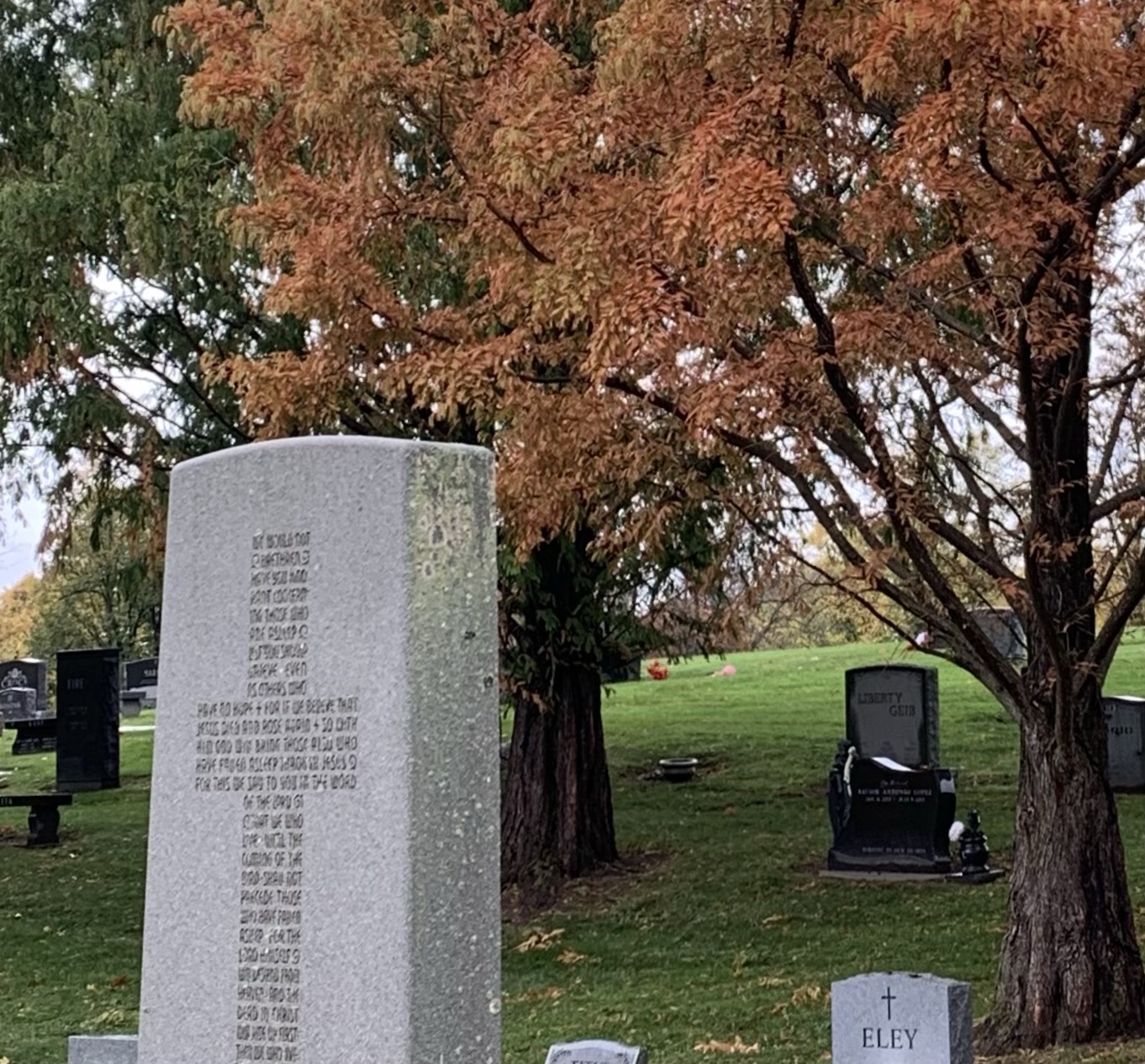
1 Thessalonians 4:13-18 inscribed on a memorial adjacent Dona’s grave.
1 Corinthians 15 – simply the best encouragement
Paul reminds us, “if only in this life we have hope in Christ we of all people are to be most pitied.”
(I also read 1 Thessalonians 4:13-18 every time I visit my wife’s grave. The entire passage is inscribed on a family tombstone a few feet from Dona’s gravesite.) “Therefore, comfort each other with these words.”
Close second:
Things Unseen, Mark Buchanan
A book about the “hope of heaven that inspires and sustains passion and purpose in this life and on earth. It’s about learning how to bring heaven near – fixing our hearts and minds on things unseen.” (2 Cor 4:18)
This Canadian pastor has not written a dense theology book. Quite readable with tons of touching stories and even help from scenes in one of my favorite movies, The Karate Kid. I have a friend who lost a child at 18 months. He read Things Unseen in two days.
Third choice:
Walking with God Through Pain and Suffering, Tim Keller
Theology, but explained in a way that only Keller could. (He died of pancreatic cancer in 2023.) I read a chapter a day to my wife when she was going through chemo.
Fourth Place: Three short reads
What Will Heaven Be Like? Thirty-five frequently asked questions about eternity.
See CS Lewis’s chapter on Heaven in his book, The Problem of Pain. Also, Lewis’ journal account, A Grief Observed, about the death of his wife is quite helpful. Initially, he refused to publish it, given that the first third was so raw and despairing. (He called it a ‘yell’.) But, like many of the Psalmists, he works through his anger, grief, and fear towards gratitude for Christ.
An old man loses his cherished wife and has only hand-wringing daughters for comfort. (I note that my daughters are anything but.) Then a mysterious white dog shows up.
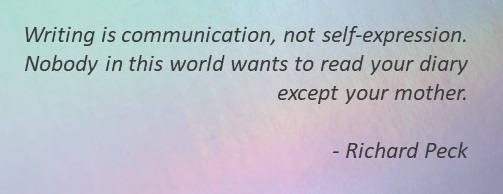
Dona passed away a year ago this month. Many times, I have opened the laptop to write a blog entry, hoping to honor her memory, not to mention the effort she put into this blog, and to share something that might help the bereaved. But all my reflections seemed like way too much navel gazing, self-centered self-expression too personal to be used by others. So, I’m taking another approach. I intend to capture what other people have said, or written, that helped me these past 12 months of grief. For the next several posts, I list my top five quotes about various aspects of the grief journey that were in some ways healing. Please share your own in the comment section.
One
Is there any phrase more useless than, ‘If only?’
– Anonymous
Two
It is what it is.
The dozen members of my bereavement group all agreed that this was a helpful statement. What does it mean for the widowed? Face the circumstances and your loss head on.
Three
Unlike some faith traditions, or the Greek Stoics, Christianity finds nothing particularly noble about suffering – it should not be welcomed. Yet, unlike secularism, Christianity teaches that suffering can be meaningful…… Keller (1)
Difficult times loosen my tie to this world and bring me closer to the Lord. Only suffering can pry me from this world and its pleasures. Moo (2)
However, and………………..
Four
It struck me that the Christian hope has a lot to do with this life but ultimately because it is part and parcel of a tangible, transformative, redemptive eternal life. Distinct personal beings like a “real distinct you” and a “real distinct me” are transformed and in communion with a tangible God in His trinity with absolutely no loss of our distinctive selves. I want this kind of hope- A hope that goes beyond this life. Because whatever spiritual practice we do or whatever medical intervention helps us we will all eventually die. We do not possess ultimate power to stop certain forces at work that threaten to undo us. But we can rely with hope on the One who holds all things in his Hand and whose purposes though inscrutable at times are at the same time meant for our good. So, why not really hope big. Hope with a capital H that carries us into an eternal glorious future while we wait out patiently the infinite glory of God to be revealed in us and in this world and the world to come.
I am reminded that we live in a fallen world where sickness and tragedy hit so many with far more intense and terrifying force than anything I will ever experience. And many, many will experience that hardship with far less support and love than I am receiving. And if it has anything to do with who is deserving of good fortune well count me out for I have already had more than my share. So, here is what I believe from the scriptures which life seems to accurately validate: “The rain falls on the just and the unjust” (Matthew 5:45) and so does the drought. The promise we have is that Jesus is with us through it all. I don’t want to come across super spiritual or strong because I am not naive. This will be a journey with pain and discouragement that will possibly provoke reactions that I will be less than proud of. But for today I am going to go with gratefulness for the prayers and love from others and “God’s peace that transcends all understanding” (Phil. 4:7).
For 8 long years of aggressive cancer treatment Dona clung to this great truth and this great Hope; a hope in a particular truth that has sustained so many in this tough, beautiful world.
(1) Keller, Timothy (2016) Making Sense of God, p.74
(2) Moo, Douglas (2000) The NIV Application Commentary: Romans (see commentary on Romans 5:3-5)
It has been a long day. I just finished chemo. I am in the Roswell Cancer Institute imaging clinic, waiting to be called for a brain scan MRI. David left to get groceries and prepare a late supper. I am disappointed, discouraged, teary-eyed, and, to make matters worse, a bit embarrassed.
7:00 pm
As I wait, I take the advice I gave to clients for years and have blogged about more than once: start journaling about the angst.
Confession:
I have been complemented by family, friends, and medical team on how well I’ve handled an abundance of difficulties throughout this process. And yes, I have felt validated respected and brave for my “handling it all so well.”
And yes, I have attributed my persevering, positive attitude to my dependence on God’s faithfulness towards me no matter what happens.
But over the last two days something started to emotionally unravel. It started with overreacting to my husband’s innocuous comments yesterday but thankfully having it all resolved quickly, more thanks to him than me.
I want to blame this emotional roller coaster on the steroids I am taking to heal the liver from an unfortunate turn in the immunotherapy treatment.
But…. Something other than steroid-craziness is going on.
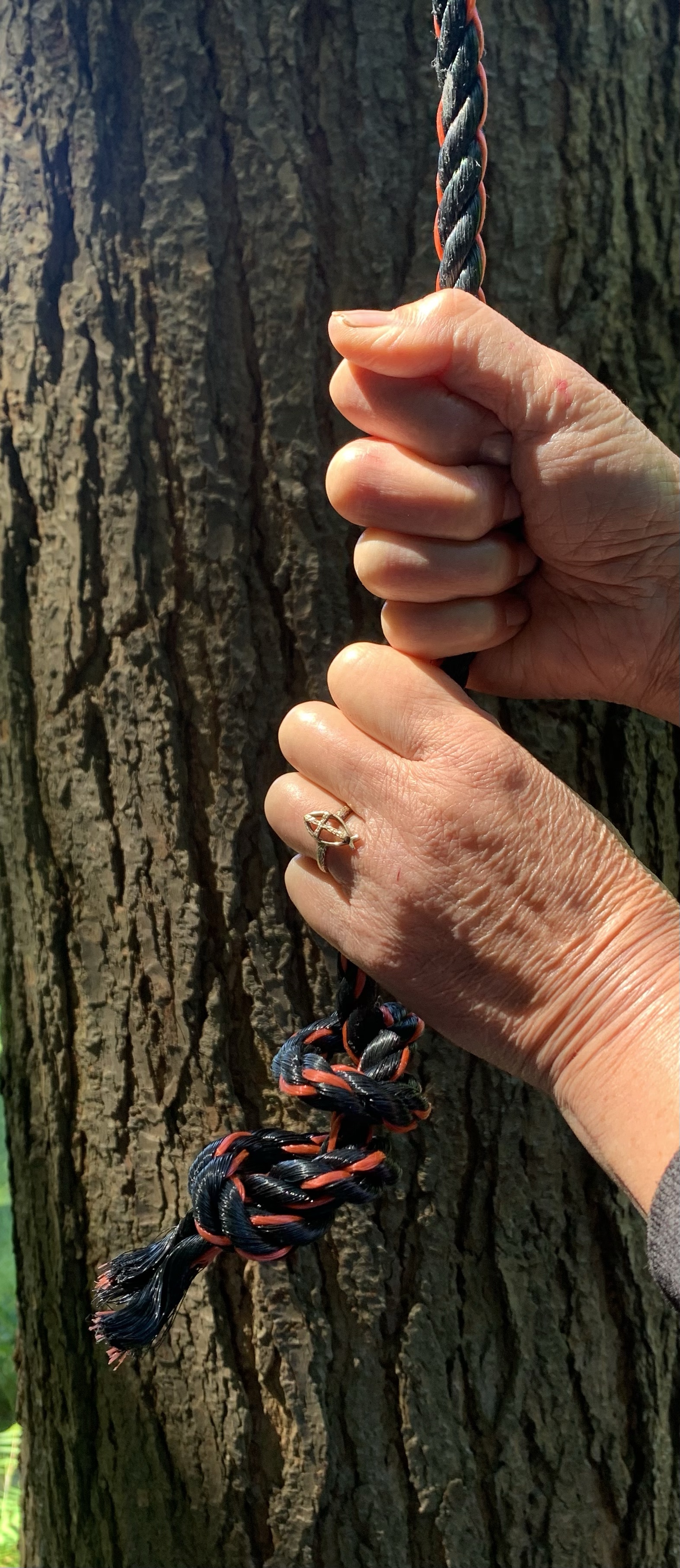
My ‘end-of-the-rope’ was bound to come but I thought it would come at the ‘end-of-the-road’ when all treatment options have been tried and failed, therefore reclassified as terminal. Another counselor told me once that when you reach the end-of-your-rope – the point where you cannot climb back up but cannot lower yourself further – it is time to let go and trust in God. I love that image. I have rehearsed that end-of-rope/end-of-the-road moment too many times to count. In that future scenario, when told there is nothing else that modern medicine can do for me, I picture myself demonstrating great faith and even love and gratitude for my wonderful medical team. I become some kind amazing hero of faith in my eyes and in others. Ah, the follies of ego!!!
But I am having an end-of-rope moment now. This morning, I had an unexpected call from my oncologist to come in for an unscheduled visit. I was hoping he wanted to discuss weaning me from steroids. The opposite happened as my liver enzymes had gone up. He has increased, slightly, my steroid dose; meaning less sleep and immunotherapy still off the table.
I had an unexpected reaction to the consultation. I got visibly frustrated and hurt. Tears!
The irony and hypocrisy of the reaction is that yesterday I had complained to friends of hearing of cancer patients reacting similarly, being unreasonable and unfair to their medical providers.
Not that I went ballistic. Hospital security was not called. But I had tears of frustration, and I over-questioned my healthcare providers. I argued about use of words. “You say ‘increase’ in liver enzymes but I say, ‘slight uptick’ when I look at the graphs.” After spending more time with me than I deserved I patted my oncologist on his hand as he was leaving, an apology, of sorts. But it did not end there: as I was led to the chemo chair, I was told that my oncologist had just ordered in addition to the chemo an hour of saline for low sodium before the infusion. Come on! My feet were already in a crazy swollen state of discomfort I questioned the purpose of this. I asked the infusion nurse several times to call the oncologist finally reconsidered and gave me what I wanted. (If the low sodium was acute, he would have won that skirmish for sure).
8:00 pm
Back in the imaging waiting room, the technician finally called my name for the MRI. As we are walking to the imaging room, he said the scan would not take an hour, as I assumed, but only 15 minutes. That simple correction somehow, in some way, flipped the mood switch. Delighted, I became my friendly chatty self as I sensed that joy was beginning to take hold again.
The Lord heard my lament and gave me hope. David is thankful to see the smile back on my face!
9:00 am, Tuesday, August 9
But I cannot leave it at that. It is tempting to think of God smiling at us with approval when we are behaving graciously and mercifully to those around us especially when we are suffering and amid disappointments. Conversely, we imagine him clucking his tongue when we are miserable, irritable, and faithless. The thing about that is that it does not typically lead to a heart change. Why? Shaming is not affirming or inspiring. It gets us stuck in a spiritual arrested development. Spiritual maturity on the other hand fills us with the knowledge of God’s love that surpasses our understanding (Ephesians 3:19).
He made us to trust in his unfailing and never changing love. It is who he is, and the operative word is grace (unmerited favor).
Neither you or I can make God love us more or less by what we do when we have already thrown our hat in the arena of God’s faithfulness. And in a mysterious, wonderful way we are changed and willingly motivated to continue the good fight of our faith. (1 Timothy 6:12) We can let go of the end of the rope.
And, as Paul writes, “No eye has seen, and no ear has heard, and no mind has imagined the things which God has prepared for those who love him.” 1 Corinthians 2:9
This is something to fight for, something to live for!
I pray often – not long prayers necessarily, sometimes short ones. Sometimes the pain or anxiety I am experiencing is all I can see so my prayers are not eloquent. “Jesus, help me!”
I pray for those who ask for prayer and those who don’t. Praying for others feels good – feels like a privilege. And many people appreciate the effort and spirit with which it is done.
Sincere prayer as an act of obedience
My husband, David, was in the city walking when a panhandler approached. The man described the jam he was in and asked for money. Over the years, I have challenged David’s cynicism regarding panhandlers and encouraged him to not to ignore people on the street asking for money. After all, panhandling is not anyone’s dream job. Although now homeless, or dealing with a mental disability, or both, they were once children dreaming of careers as a pilot, teacher, nurse, basketball player……like us. As the man pocketed the money David gave him and turned to enter a nearby Burger King, David called out, halfheartedly without real conviction, “I’ll be praying for you.” The man stopped, did an about-face, walked back to David, and said, “Will you pray for me now?” My somewhat stunned husband responded positively, placed his hand on the man’s shoulder and prayed for him. David walked away from this encounter with a lot more conviction and much less cynicism.
But certainly not every time we pray do we walk away feeling uplifted or victorious. Sometimes we pray in obedience to a biblical fundamental, but we are left still shedding tears for others or for ourselves. We are just not sure we are always going to get the answer we want. But despite the disappointments, we pray. It’s just what we Christians do.
As my followers know I have been struggling through treatments for metastatic breast cancer for 3 1/2 years. Just yesterday I was told that my X-ray scans showed a reduction of liver metastasis. Hip, hip hooray! The immunotherapy may be the ticket for a longer life. As my daughter said, “You were due for some good news.” The combo of immunotherapy and chemo was doing its job. But the celebration was short lived. My blood labs showed high liver enzymes that indicated hepatitis. Immunotherapy had triggered an immune response against the healthy parts of my liver. Immunotherapy is off the table for now and indefinitely as cancer treatment takes a back seat to restoring a sick liver. David and I left the clinic heartsick. I considered all the prayers from my friends over the years on my behalf for a better outcome to the ongoing story of keeping me alive as long as possible. I often feel self-conscious about it. I do not think I am monopolizing my friends’ prayer time but worry that they grow weary or understandably numb to the same requests over and over, month after month, year after year, which go….
“Please pray this new therapy will improve my condition.”
“Please pray this side effect will abate.”
“Please pray I will get some sleep………………”
Our doubts do not change who God is.
A friend has been praying for her drug-addicted son for years. He is almost forty and homeless and recently found sleeping in a street by the Buffalo police. He was taken to jail after the police discovered he had an outstanding arrest warrant. My friend confessed at our church community group that she wondered why, decade after decade, her prayers for her son are not answered. She went through a litany of reasons: “Maybe I don’t have enough faith. Maybe I have not repented from some sin that blocks God’s answers.”
But in all her doubts and disappointments she persists in prayer. She and her husband cannot shake the feeling that Jesus is “near to the broken-hearted” (Psalm 34:18). They may doubt and worry, but they do it in the presence of God.
Lamentations 3:19-23
19 I remember my affliction and my wandering, the bitterness and the gall. 20 I well remember them, and my soul is downcast within me. 21 Yet this I call to mind and therefore I have hope:
22 Because of the Lord’s great love we are not consumed, for his compassions never fail. 23 They are new every morning; great is your faithfulness
Prayer as the co-existence of grief and defiant hope
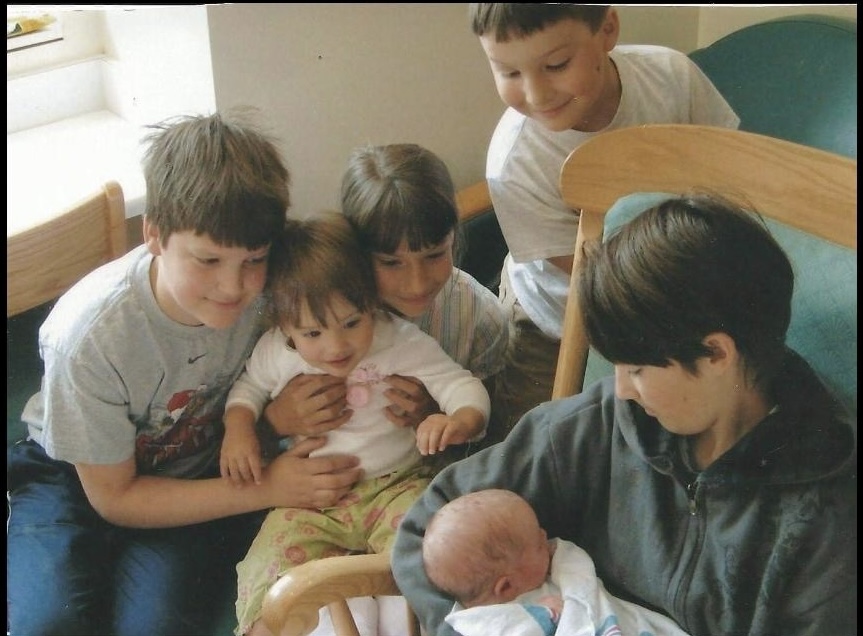
Last week, in Fairbanks, Alaska, Josiah, the oldest son (25 years old) of our dear friends, Tony and Lara, was killed; hit by a car while taking a walk on Saturday night. This couple are not new to devastating family trauma. Thirteen years ago, their 5-month-old, Jeremiah, died unexpectedly, and then 9 years later their daughter was treated for an aggressive, protracted leg sarcoma (currently in remission).
Tony and Lara’s children in 2009. Josiah is holding Jeremiah.
And now this! What more can a family take? As my husband and I listened to them we were once again struck with their faith in the faithfulness of God. Truthfully, before we called, I was ready to hear some ‘justifiable’ self-pity, anger, and bitter fatalism. Sure, they cried, and we cried with them, but as we listened, we could only marvel at the Holy Spirit’s care of them as they enumerated all the love that friends, family, and church were pouring out on them. They said, “We feel blessed by all this love!”
To summarize, this heartbroken couple expressed their faith as hope in the resurrection and the mysterious promises of God righting all wrongs some day at the end of time. We do not live in a cold, impersonal, pitiless universe of random chance and tragedy.
Seven months ago, Labib Madanat (read about him in Christianity Today) died suddenly while leading an exploratory mission group through Iraq. He left behind not only one of the most influential Middle East ministries but five children and his wife, Carolyn.
Carolyn and I talk frequently, she is in England, and I live in New York.
In her grief and questions, she will voice her concerns for her children and admit to overwhelming loneliness and sadness for the husband she dearly admired and loved. (Labib was hard not to love.)
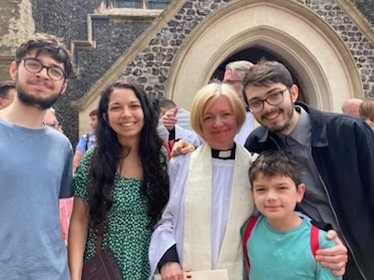
Rev. Carolyn Madanat and her children
I thought she might take a protracted break from her work as a curate (associate pastor) for the Church of England but that’s not happening. She soldiers on, engaging in the rhythms of her church: studying, teaching, counseling, administering, baptizing, leading worship. And then of course there is the running of a household and the comforting of children that are looking to her for the stability they need in such a time. She doesn’t accomplish all this with the stiff-upper-lip British stereotype. She’s deeply authentic and realistic in what she faces.
But again, I have never heard that she cannot do it or that the Lord is not there for her or real to her.
She leans hard into the presence of God through prayer, church life, and the word of God.
She writes,
“I realized that trust in God’s goodness and feelings of sadness are not mutually exclusive; lament is a path to praise that travels through disappointment and pain and being ok with not knowing everything. It is accepting the co-existence of grief and hope; mourning what has been lost yet grateful for what remains. Part of prayer, I’ve realized, is surrendering to God the questions we don’t have answers for and having the assurance that they are in safe hands; it is having enough confidence in God’s goodness and steadfast love towards us that we don’t need to settle for ‘glib’ answers.”
Often my husband has told me that amid spiritual dryness, frustration, bleakness of spirit, Peter’s response to Christ in John 6:68-68 says it all for him. It is the starkness of its truth that pushes him and many others into a deeper wisdom of God’s goodness.
In this incident, Christ’s teaching has alienated many of his followers and they begin to desert him. Jesus then turns to his closest disciples and asks, “Will you leave me too?”
Peter responds, “Where else would we go for You have the words of eternal life. And we believe and are sure that you are the Christ, the Son of the living God.”
We pray and trust God no matter what because He is the good and compassionate God who loves us. Sure, we are besieged by doubts during difficulties and often find his ways inscrutable, but we still pray and cry out with tears and laments to God. Our laments are not simply floating into an impersonal, pitiless, cold universe. We are not alone, and our lamenting follows the examples of the great men and women of the Bible.
In Psalm 56, the psalmist, presumably King David, asks God to “keep his tears in a bottle” (v.8) in remembrance. David is expressing a deep trust in God—God will remember his sorrow and tears and will not forget about him. David is confident that God is on his side. He says, amidst his troubles,
In God, whose word I praise, in the Lord, whose word I praise— in God I trust and am not afraid. What can man do to me?
Jesus remembers all the things that happen in our lives, including the suffering endured for His sake. In fact, there are many instances in Scripture of God’s recognition of man’s suffering.
So, like the millions before and the millions after, I pray for certain outcomes, and I will pray fervently for those outcomes to be in God’s best interest for me and others. But if I don’t get my hopeful outcomes, I will assume that my tears and sorrow are held tenderly by God and will be shown one day to have been the just right and good outcome that I could have never imaged. But within Gods cosmic plan those bottles of collected tears like the collected tears of many will be somehow redeemed into a glorious and splendid eternal reality beyond and more we could have ever imagined.
I have heard this refrain many times in my life, especially from Italian American relatives. Maybe it is an Italian American sentiment, but I suspect many people feel this way. How else can we explain a culture that is consumed with living better, longer, and more independently. Is not living with vim and vigor a prized and admired achievement? Are not many of us willing to put commitment, time and money into achieving our health goals through exercise, better nutritional choices, active recreational activities (baking, bowling and backgammon not qualifying), as well as keeping up with all recommended preventive health measures?
Good health is no doubt a great blessing, but it is also become a badge of honor to proudly display. “God bless you” is an expression that I find myself using when I meet old people who want to brag on their longevity and good health. This is odd. It makes more sense to pronounce God’s blessing on folks who sneeze. They might need a blessing to ward off sickness. Longevity with vibrant healthy living is certainly a gift from God but it is not a reward!
So how does this relate to cancer and shame?
Many cancer patients and those suffering from chronic illness struggle with a sense of stigma, guilt, or shame. Why should this be? Since diagnosed with stage-3 breast cancer in 2014 and now dealing with metastatic cancer since December 2018, I had come to understand this feeling.
Two weeks ago I did not get a good scan report. I had been feeling relatively good, not vim-and-vigor good, but good enough to be positive as I waited for the report’s findings. My husband and I were therefore blindsided by the news (some liver tumor progression). The FNP was kindly trying to comfort me before the oncologist came in to discuss a new treatment option but I just wanted her to leave so I could comfort David, knowing he was distressed by the news.
“David I’m so sorry for you,” was, oddly, the first thing I said to him.
He kindly responded, “You shouldn’t feel sorry for me. I feel so badly for you.”
What was my apology about? After some self-examination I realized that I irrationally believed I had let him down and was the cause of his angst and worry. I also was reluctant to tell friends who were praying for me. Again, I felt like I was letting others down; that somehow, I did this to myself or that I was defected and not able to do my part in this battle against cancer. But worst of all I was dealing with the erroneous belief that God did not want to bless me in a way we were all hoping for because I was somehow unfit. I felt ashamed.
Shame and Shaming
Shame, according to Webster, is a ‘painful emotion caused by consciousness of guilt, shortcoming, or impropriety.’ It is an intensely difficult emotion. ‘Shaming’ is also a noun and is the act of subjecting someone to shame. And there is plenty of shaming in children’s and adults’ lives. Shaming arises from what we esteem in our culture: media-good looks, fit bodies, youth, material acquisitions, achievements, and correct opinions.
Yes, shaming is ubiquitous in parenting, marriages, health visits, social media, teaching, and among kids on playgrounds, middle and high schools.
In his early twenties, my husband taught science in a junior high school in North Carolina. Junior high is ground zero for shaming. No one is exempt. David humorously recalls one day when a student became upset with him.
“You are nothing but a big-nosed, baby teacher!” she shouted, storming out of his classroom.
That evening, David looked in a mirror, carefully examining his face.
“Darn, she is right! I do have a big nose.”
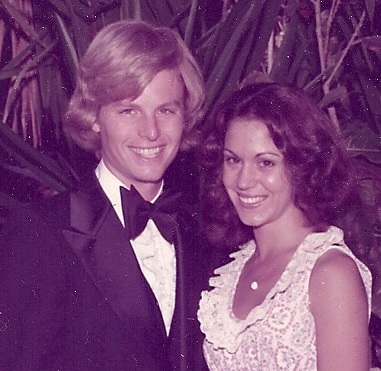
Me with ‘big-nose, baby teacher’ in 1977. Story and photo used with complete permission from my husband. Yikes! On closer inspection, my nose could use a tweak (vanity, vanity!)
David is forever grateful this shaming occurred when he was 22 and not 12; allowing him enough maturity to process the revelation (kinda). But he admits that from that fateful day he has been forever conscious of his proboscis.
Personally, I like his nose. I was a bit bothered by the label, ‘baby-teacher.’ What was that about?
Getting back to cancer
I know that cancers start because of a mistake in copying DNA when normal cells are dividing and growing. Mainly, these mistakes just happen by chance. I remind myself of this over and over. And yet, doubt creeps in.
We have heard it said and perhaps said it ourselves, “He was diagnosed with cancer, but he was a smoker. She was diagnosed with breast cancer, but she was not doing breast exams on herself (that was me), or she ate a ton of junk food.” I could go on with the ‘buts’ and ‘victim shaming’. Fear and shame are intermingled with cancer. Without necessarily meaning to, we feel subtly critical of those stricken with cancer and comfort ourselves against the fear of cancer by looking at our wellness as doing it right. Then a cell mutates during replication and somehow finds a way to continue to replicate……..and we feel the sting of shame.
The shaming of Christ
“If you have your health you have everything” is shortsighted. We can have our health, live wonderfully well until 105 and not have everything. Everything includes the eternity we are destined for. 105 or 1005 years old is paltry in comparison. Our bodies and/or minds will someday fail us so now is the time to take stock of the purpose of human life as God-imagers, drawing our self esteem and identity from being beloved children of God. And most of all we are to take comfort and relief from trusting in the Christ who not only died for sins but also for our shame regardless of what cancer or culture tells us or what we tell ourselves because of shame from things we have done.
In fact, Jesus endured shaming himself.
Hebrews 12:2
We fix our eyes on Jesus, the pioneer and perfecter of faith. For the joy set before him he endured the cross, scorning its shame, and sat down at the right hand of the throne of God.
“Shame was stripping away every earthly support that Jesus had: his friends gave way in shaming abandonment; his reputation gave way in shaming mockery; his decency gave way in shaming nakedness; his comfort gave way in shaming torture. His glorious dignity gave way to the utterly undignified, degrading reflexes of grunting and groaning and screeching.”
And so, I work to move on, praying Psalm 25:1-3b:
In you, LORD my God, I put my trust. I trust in you; do not let me be put to shame, nor let my enemies (my self-image, the stigma of cancer, American perfectionism, Satan the accuser, or any worldly thing!) triumph over me. No one who hopes in you will ever be put to shame.
It has taken me decades to learn the meaning of “fear God or fear everything else.” Here is my story.
In 1971, the voting age was lowered to 18, the majority of Americans finally turned against the Vietnam War, Disney World opened in Orlando, James Taylor and Janis Joplin were at the top of the charts, and I was looking for peace of mind.
At the spontaneous invite of a college acquaintance I joined a bible study. After listening and reading for several weeks, I began to believe, or so I thought, I was finally exposed to the “real Gospel.” I was told Jesus wanted to be my buddy and cheerleader; a celestial presence that would give me peace and lead me on paths of success and happiness!
Fearing the Lord, a common refrain in the scriptures, was tamed by well-meaning Christian encouragers. No need to fear God, just trust that Jesus died for my sins and then enjoy an “all good, cleared for heaven status.” Discipleship, as in learning how to live like Jesus, sounded nice but it also sounded optional and too radical. I thought I was okay with that, but guilty and confusing feelings persisted as I tried to walk the fence between my youth culture and the Christian life. Little did I realize that “fear of the Lord” was wedded to love and comfort from God. I was trying on the new clothes of a Christian commitment and not finding them very comfortable and certainly not stylish. It was grueling. Anxiety and insecurity abounded but I stubbornly persisted towards this dead end; always hoping I would get a thumbs up from Jesus for labeling myself as a Christian. Jesus would understand a young woman just wanting to be, well, cool and culturally relevant while still loving Him or so I wanted to believe. I suspected that I was eventually going to give up this fling; the cognitive dissonance was driving me nuts. My secular friends were also waiting for the penny to drop and figured it would be just a matter of time before I was brought back to my secular senses.
Before writing further, let me be clear. I had no question that I was accepted by God. I had peace with God through Christ’s sacrifice, not through any action or behavior on my part. But I did not have peace of mind.
Living a double life was becoming too stressful. I finally cried uncle. I embarked on a good old-fashioned biblical activity. I began to REPENT of my double mindedness in order to learn how to live the way Jesus wanted me to.
First, I realized that I had to circle back around to the fear of God. It wasn’t easy. I circled with trepidation; the skittish movements of a timid animal trying to get close to a compelling fierce presence that was simultaneously good and terrifying. For much of my youth fear was the compass that directed my ways and thoughts. It had worked until it didn’t!
Dale Bruner, commenting on one of the most ominous but, paradoxically, comforting sayings of Jesus (Matthew 10:26-31), concluded, “And blessedly, the one who fears God is liberated from fear of people – no little liberation…..Fear God or fear everything!” 1
Again, clear explanations are needed. We are not to be scared of God. Fear of God is not the fear a servant has for a harsh master. It is more akin to the love, reverence, awe, and, yes, fear a child might have for a loving, wise parent who has expectations of the child for her own good. Like the loving parent, nothing can separate us from his love. He will never leave or forsake us. (Romans 8:38-39; Hebrews 13:5)
As it turned out, as I approached the center of that terrifying, fearful, holy presence that I began to experience a beautiful, flourishing life. I experienced a power to not just want to be good but a liberation that made it possible for goodness, wisdom, love and community to begin to be part of my nature without the white knuckling attempts to be good. My deepest needs were finding the source and power to become a learner of Christ and I was being renewed and refreshed; not overnight but the trajectory was set. I had purpose and purpose that finally brought the peace.
Here I am, 47 years later with metastatic breast cancer, a compromised immune system, and a lung inflammation (side effect of cancer drug). As it turns out, amid the COVID-19 pandemic, I never been more grateful for embracing the fear of God. There is an ultimate authority who reminds me of who is in charge and why and for whom I exist.
What is the Fear of God?
Psalm 34 is helpful here.
• Seeking the Lord,
• Embracing that God is in charge, not me or any other person, institution, or government,
• Recognizing that he is the center of the universe, not me,
• Gladly accepting that He is the boss of my life, not me, and finally,
• Operating as a mortal destined for immortality because of the will of the one “who alone is immortal and lives in unapproachable light” (1 Timothy 6:16).
Many of you will have your own descriptors for a healthy fear of the Lord. The bottom line is that the ‘Fear of the Lord’ is a good and needful truth that grounds and encourages us in this chaotic world.
1. Bruner, F.D. 2004. Matthew, A Commentary, Vol 1: The Christbook. Eerdmans, Grand Rapids, MI. 483 pp.
Cancer metastasis tempts me to see all of life and relationships pivoting around the cancer diagnosis. If I’m not careful cancer becomes the only lens from which life is observed. It’s clearly understandable. Cancer demands attention. But as it turns out there is so much to life that cuts into the self-absorbed cancer life.
Story telling
I love stories; especially the real-life ones.
I love telling stories and not just stories about me and mine.
I love other people’s stories and draw awe, inspiration, humor, human pathos, delight and enjoyment from them as if they were mine.
I just don’t enjoy stories; I absolutely need them to keep me grounded and connected to people and to God.
Heroism, desperate need met by extraordinary compassion, grit and human feats of endurance, discovery, invention, sacrifice, visions, dreams, revelations and miracles are stories that I will tell if I have been privileged to know of them. I tell many, many, many stories.
A story of dear friends Audra and Jeremy are adopting a Down syndrome 19-month-old – nicknamed Hank – who is in an orphanage in India. They have never adopted or fostered. Audra has never been in a foreign country other than Canada (that doesn’t count), but she could not be more fearless, committed and excited. Passionate love has taken hold of her. Before she was dissuaded by the adoption agency Audra was determined to foster Hank in India for 3 to 4 months until the last court hearing and all documents were in place for her to bring him home. Audra and Jeremy were undaunted by obstacles; even the challenges of leaving her other three children in the care of Jeremy, the Dad. This couple was propelled by extraordinary and extravagant love. They only knew love’s longing to take Hank out of the orphanage, care for him, and ultimately bring him home to be part of his new family and church community; each which await his arrival with joy and anticipation.
The Bad Math of Jesus
God as shepherd and us as his flock is a common motif in the Bible for describing God’s love and devotion for us.
This parable is one of my favorites for describing the extravagant love of God towards his children.
Matthew 18:12-14
Jesus said, “What do you think? If a man owns a hundred sheep, and one of them wanders away, will he not leave the ninety-nine on the hills and go to look for the one that wandered off? And if he finds it, truly I tell you, he is happier about that one sheep than about the ninety-nine that did not wander off. In the same way your Father in heaven is not willing that any of these little ones should perish.
So, what is the big idea in this story? The extravagant love of Christ can look foolish, indulgent, and possibly even irresponsible at times.
Phillip Yancey has called this the ‘atrocious math’ of Jesus.
The shepherd leaves the 99 on a hill, not in a sheep pen or in the care of another shepherd. No! He leaves them on a hill, vulnerable and unprotected so that he can seek after the one sheep that has wandered away.
Does the shepherd not care about the 99 because his favorite sheep, Fluffy, is the one who wandered off? Of course not. There are no favorite sheep in this story. There’s no Fluffy or Nemo or Benji because this is not a story about animals. No one sheep is the hero in this story. The only hero is the shepherd who wants his sheep, all his sheep, home with him. And he will put himself and the other obedient 99 at risk in order to go after one foolish and wayward sheep to bring her home. The extravagant, sacrificial love of God is the big story here.
Audra and Jeremy’s love for a disabled child is today’s big story for me. But this love is extravagant and some including myself had wondered whether it is too extravagant. Extravagant, sacrificial love motivated by Jesus’s spirit and example is only thing that can explain it. And Audra and Jeremy would agree. They see it as a calling given by God of which they are delighted to follow for the rest of their lives.
Be inspired but more importantly respond to the calling of God to bring you home. And when you do don’t forget to be grateful and thank Him that his heart is bigger than his numerical calculations.
Being known by name is significant and a comfort in the midst of difficulty.
Naming tumors is a real thing. And I don’t mean naming the specific type of cancer. No, these are pet names. Arnold, Terminator 1, Terminator 2, and disliked politicians are common tags assigned by cancer patients. Most people report that naming their tumor is an empowering exercise allowing them to wrestle back a little control from a bully.
Unfortunately for me, I would need a baby naming book in order to find names for all the little tumors that are floating around. Fortunately, I’m not attracted to the name-your-tumor game but I’m not judging those who are. Whatever helps cancer patients not feel so helpless is probably a good thing.
But I’m intrigued by the need to name a thing or person. Assigning names, being referred to by names, labeling objects by names, and finding meaning in names fosters connection and intimacy to each other, our environment, and, apparently, our diseases. The importance of naming is found in both Testaments. Being named, having a name carries spiritual significance. God revealed his name to Moses. Jesus was named Immanuel, ‘God with us.” Both Peter and Paul were renamed by Jesus.
When I was first married, I complained to my husband that I wanted to hear my name spoken by him more often. Hearing my name by my beloved made me feel special to him and more connected. It capped off the special relationship we shared. No doubt he was initially perplexed by this marital complaint but happy to accommodate.
The following verses in the gospel of John at Christ’s resurrection are exceedingly meaningful and tender to me (emphasis mine):
John 20:15-16
He asked her, “Woman, why are you crying? Who is it you are looking for?”
Thinking he was the gardener, she said, “Sir, if you have carried him away, tell me where you have put him, and I will get him.”
Jesus said to her, “Mary.”
She turned toward him and cried out in Aramaic, “Rabboni!” (which means ‘Teacher’).
Imagine her relief, her love, her comfort to hear her name spoken by the Lord at such a time. It’s an image that carries me through this harrowing medical ordeal. Imagining the Lord of the universe saying,
“Dona, I’m here with you.”
“Dona, I’ve got this, don’t be afraid.”
“Dona, you will be with me forever.”
I don’t feel a need to name a tumor or tumors to feel more empowered or in control. He knows and calls me by my name. That is enough. That is everything.
“Death Cafes” are springing up in cities throughout the world to address the subject of death and how-to live with death’s inevitably.
Apparently, the movement was started to give people a “safe place” to talk about death without being accused of morbidity. Billed as a philosophical inquiry on mortality, people looking for a grief support group will be disappointed. “Eat cake, drink tea and discuss death”, is the benign motto. The decor includes mugs, teacups and posters with creepy skulls, skeletons, and ravens painted on them. I admit that I’m put off by the skull mugs in the Death Cafes.
But these venues and discussion groups deserve more than half a point. The vast majority of Americans live in the mythical state of immortality. ‘Mythical immortality’ (my term) is the belief that other people die, I don’t. (See, ‘I Like the New Metastatic Me’) When we do think about death it is in the context of avoiding it. Anne Patchett writes:
“The fact is, staving off our own death is one of our favorite national pastimes. Whether it is exercise, checking our cholesterol or having a mammogram, we are always hedging against mortality……Despite our best intentions, it (death) is still, for the most part, random. And it is absolutely coming.” 1
Death cafes, though they deal with an inevitability ignored by most, do not capture rightly the travesty of death or the Christian hope of triumph over it.
The point of Death Cafes is to make death less fearful in an age of anxiety. I get it. But the death mug approach to the subject does not capture the travesty of death. I say travesty because the Bible makes it clear that death is an enemy that is finally destroyed with the coming of the new heavens and earth at the culmination of time. And that is where the Christian hope comes in. The story is not over with our deaths. There is the hope that Christ ushers us into his glorious presence where every tear is wiped away and grand reunions are still to come. So maybe what I could benefit from would be a café whose moniker is “death does not have the last word”. A safe place where my faith tradition is shared with others so that I hear stories about people who have died well within the confidence of being on the threshold of an eternal reality. Granted my death café sounds a bit exclusive as it would possibly not be very attractive to secularists or folks from other faith traditions; but at the end of the day, with facing my own mortality I want to hear a café filled with conversations about hope, faith, courage, love and forgiveness. I want to hear and talk about Jesus. I want to live life in the moment with increasing gratitude. Hearing stories about people who lived well up to the moment of their deaths is my cup of tea and I will happily eat some cake while doing so.
Ann Patchett, “Scared Senseless,” The New York Times Magazine, October 20, 2002.


 Before writing further, let me be clear. I had no question that I was accepted by God. I had peace with God through Christ’s sacrifice, not through any action or behavior on my part. But I did not have peace of mind.
 As it turned out, as I approached the center of that terrifying, fearful, holy presence that I began to experience a beautiful, flourishing life. I experienced a power to not just want to be good but a liberation that made it possible for goodness, wisdom, love and community to begin to be part of my nature without the white knuckling attempts to be good. My deepest needs were finding the source and power to become a learner of Christ and I was being renewed and refreshed; not overnight but the trajectory was set. I had purpose and purpose that finally brought the peace.
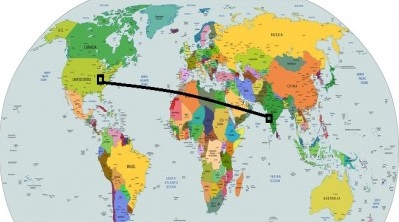 Audra and Jeremy are adopting a Down syndrome 19-month-old – nicknamed Hank – who is in an orphanage in India. They have never adopted or fostered. Audra has never been in a foreign country other than Canada (that doesn’t count), but she could not be more fearless, committed and excited. Passionate love has taken hold of her. Before she was dissuaded by the adoption agency Audra was determined to foster Hank in India for 3 to 4 months until the last court hearing and all documents were in place for her to bring him home. Audra and Jeremy were undaunted by obstacles; even the challenges of leaving her other three children in the care of Jeremy, the Dad. This couple was propelled by extraordinary and extravagant love. They only knew love’s longing to take Hank out of the orphanage, care for him, and ultimately bring him home to be part of his new family and church community; each which await his arrival with joy and anticipation.
 wanders away, will he not leave the ninety-nine on the hills and go to look for the one that wandered off? And if he finds it, truly I tell you, he is happier about that one sheep than about the ninety-nine that did not wander off. In the same way your Father in heaven is not willing that any of these little ones should perish.
 and finding meaning in names fosters connection and intimacy to each other, our environment, and, apparently, our diseases. The importance of naming is found in both Testaments. Being named, having a name carries spiritual significance. God revealed his name to Moses. Jesus was named Immanuel, ‘God with us.” Both Peter and Paul were renamed by Jesus.
 Dona's Blog